
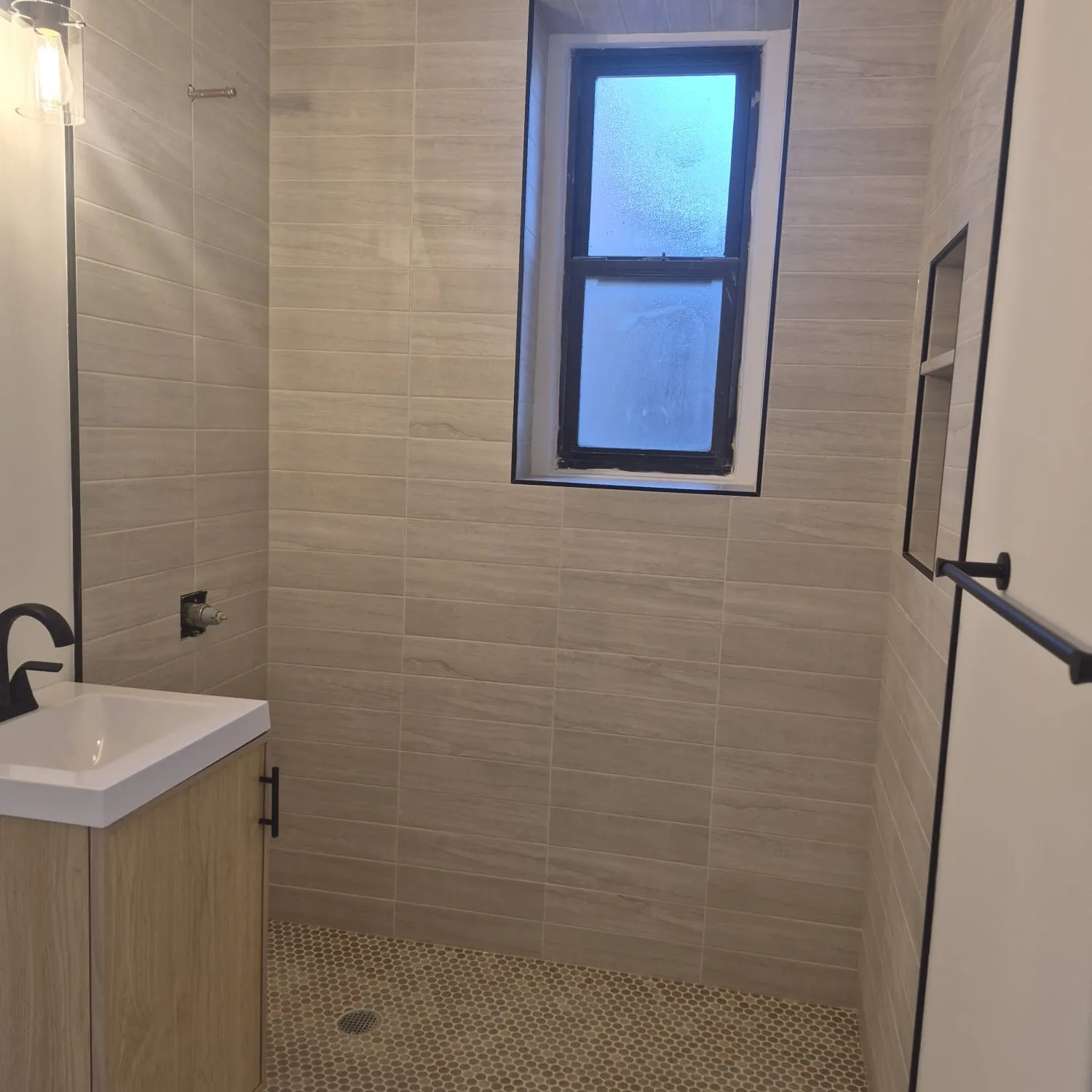
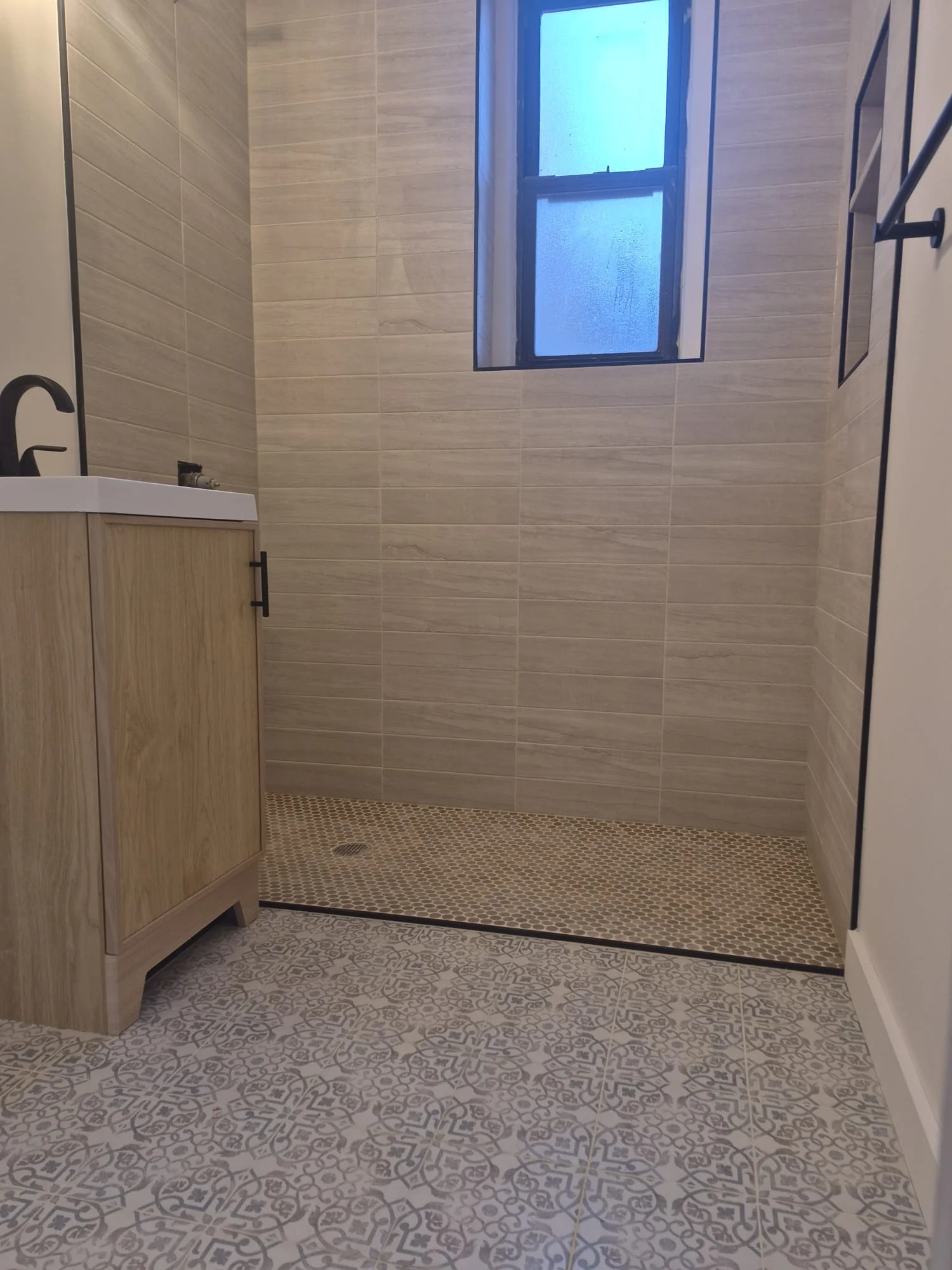
What we build in Manhattan
Six disciplines. One standard.
Bathroom and kitchen remodels in co-ops and condos make up most of the Manhattan portfolio. Full apartment guts, pre-war restoration, and stand-alone stone or tile work fill out the rest. Same standard across every category.
-
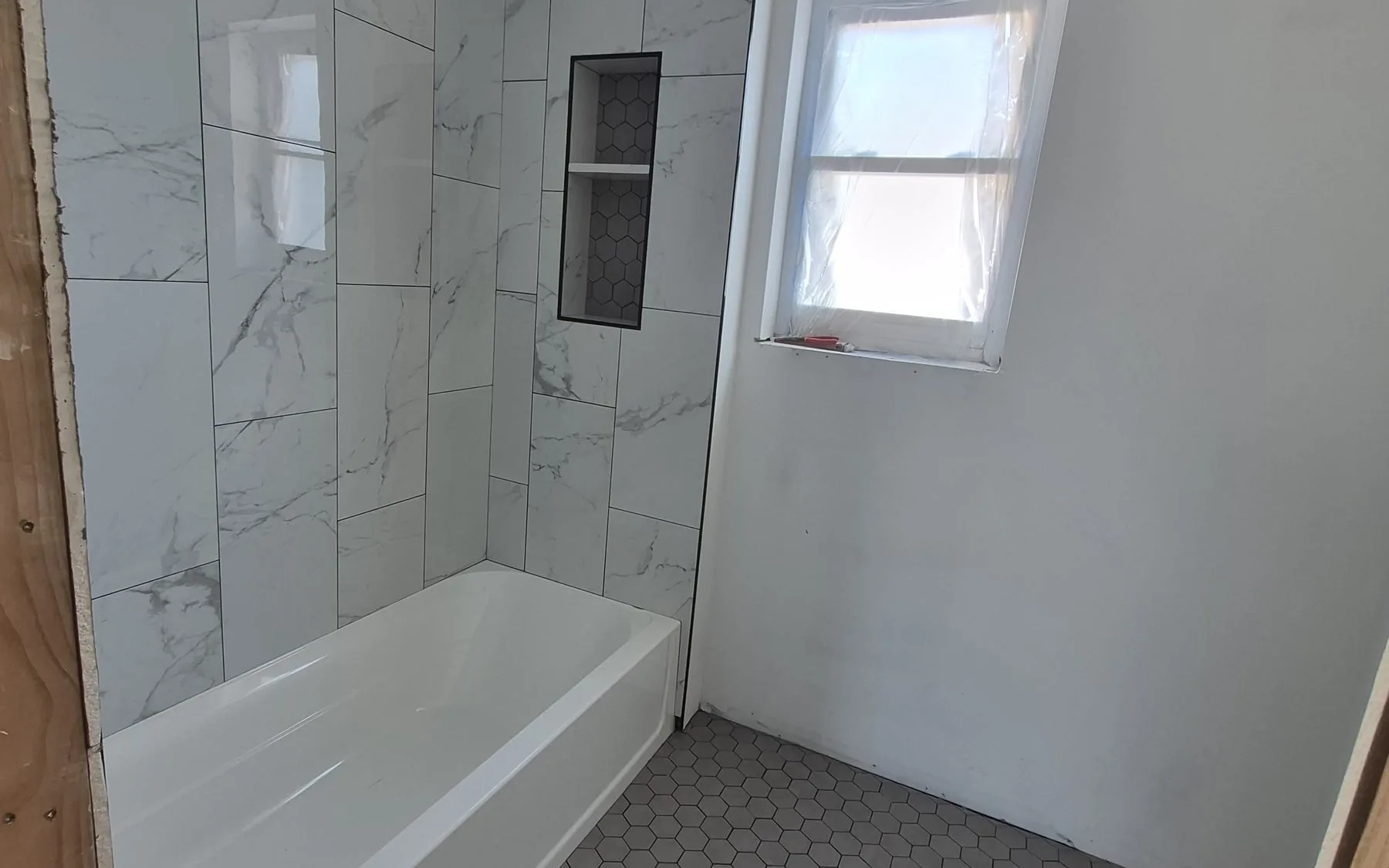
Bathroom remodeling
Primary suites, secondary baths, and powder rooms. Co-op and condo waterproofing standards, freight-elevator-friendly demo, slab vanities, smart-bath integration.
-
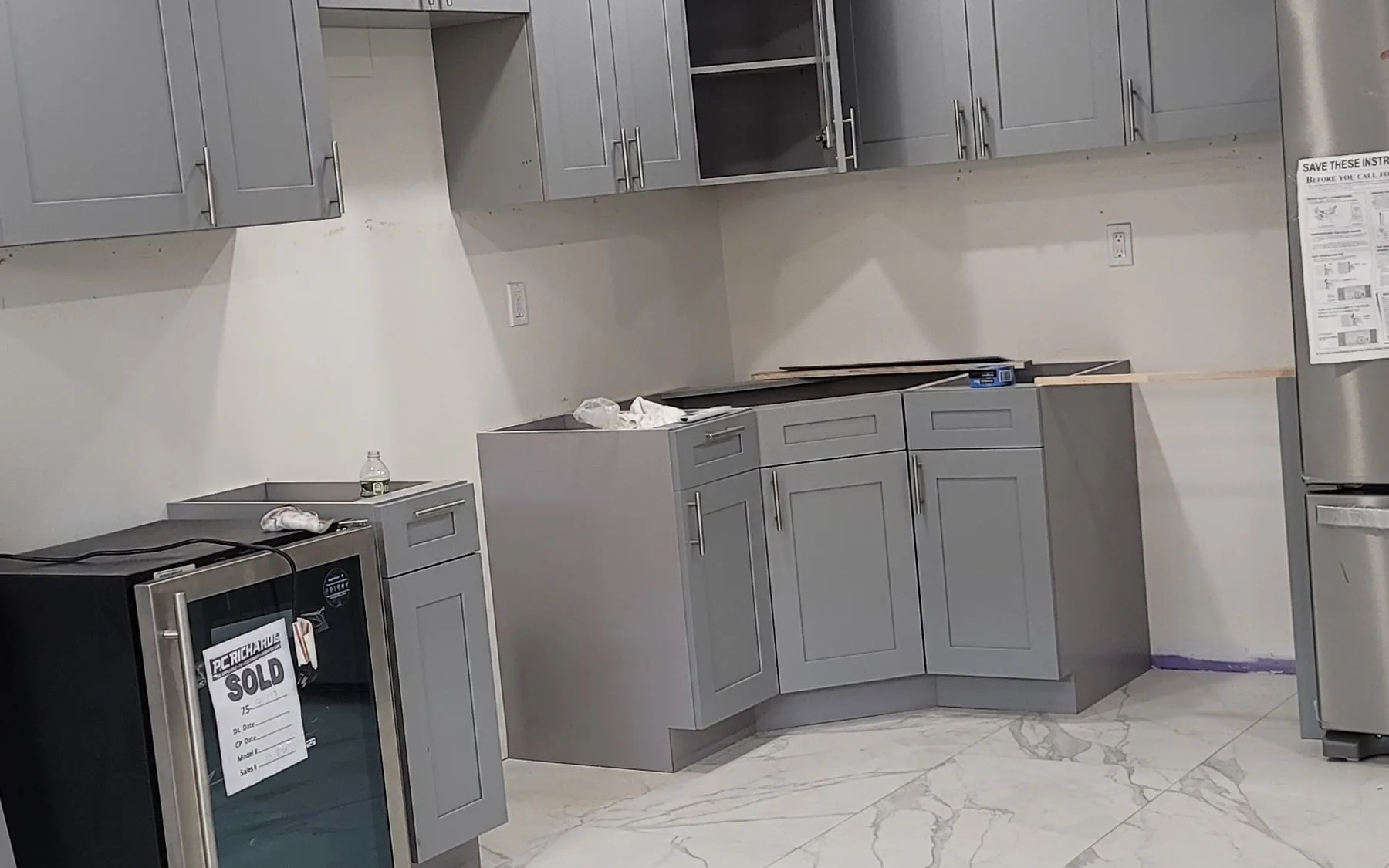
Kitchen remodeling
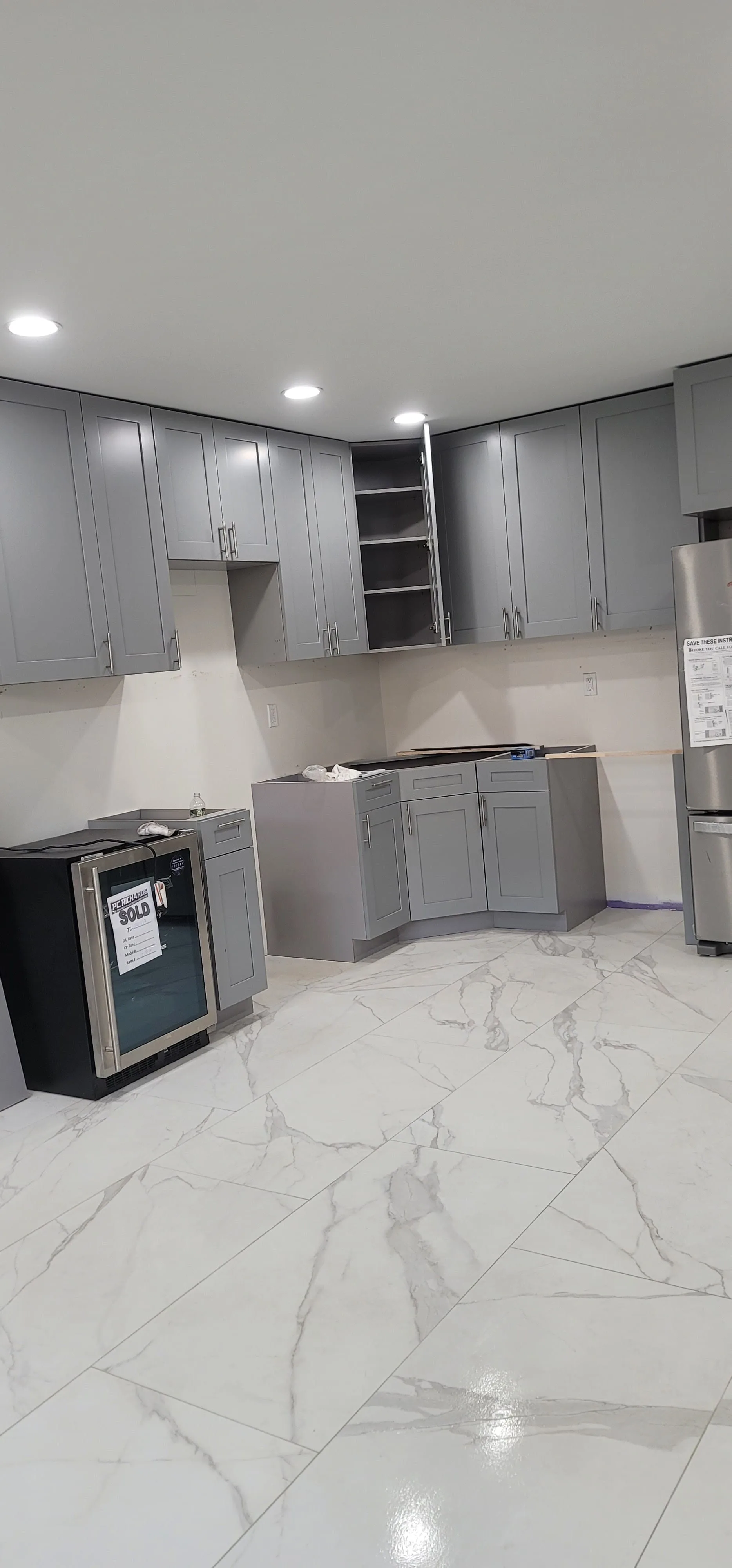
Custom and semi-custom cabinetry sequenced against the alteration agreement window. Slab quartz or marble countertops. Range-hood venting through original servant chimneys when the building allows.
-
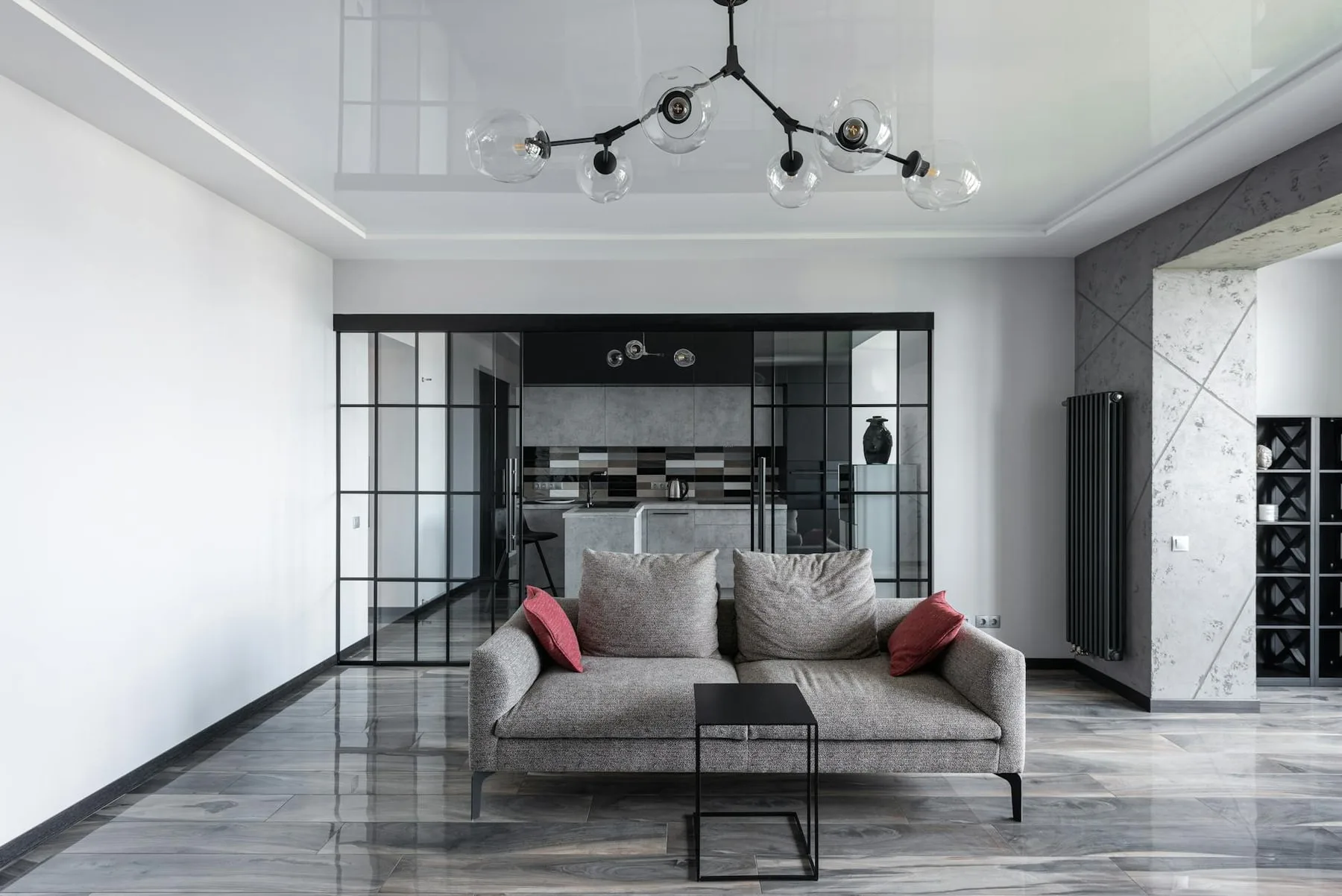
Apartment, co-op & condo remodeling
Alteration agreement packages drafted by us — drawings, contractor COIs, scope-of-work narrative, board comment responses. DOB filings run in parallel.
-
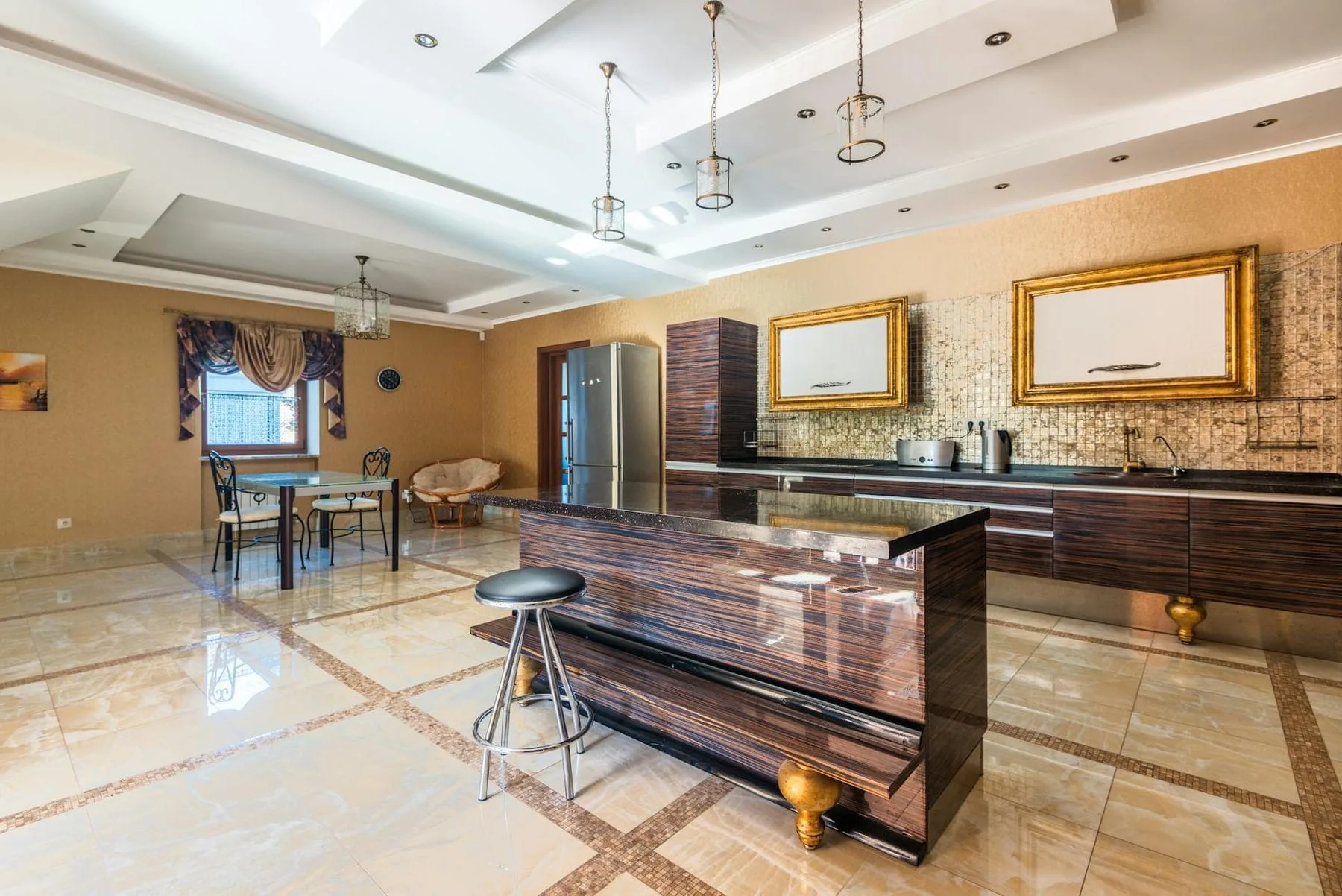
Full home remodeling
Apartment gut renovations and combination unit projects (two adjacent units merged into one). Family-relocation timelines, building-staff coordination, full DOB inspection cycle.
-
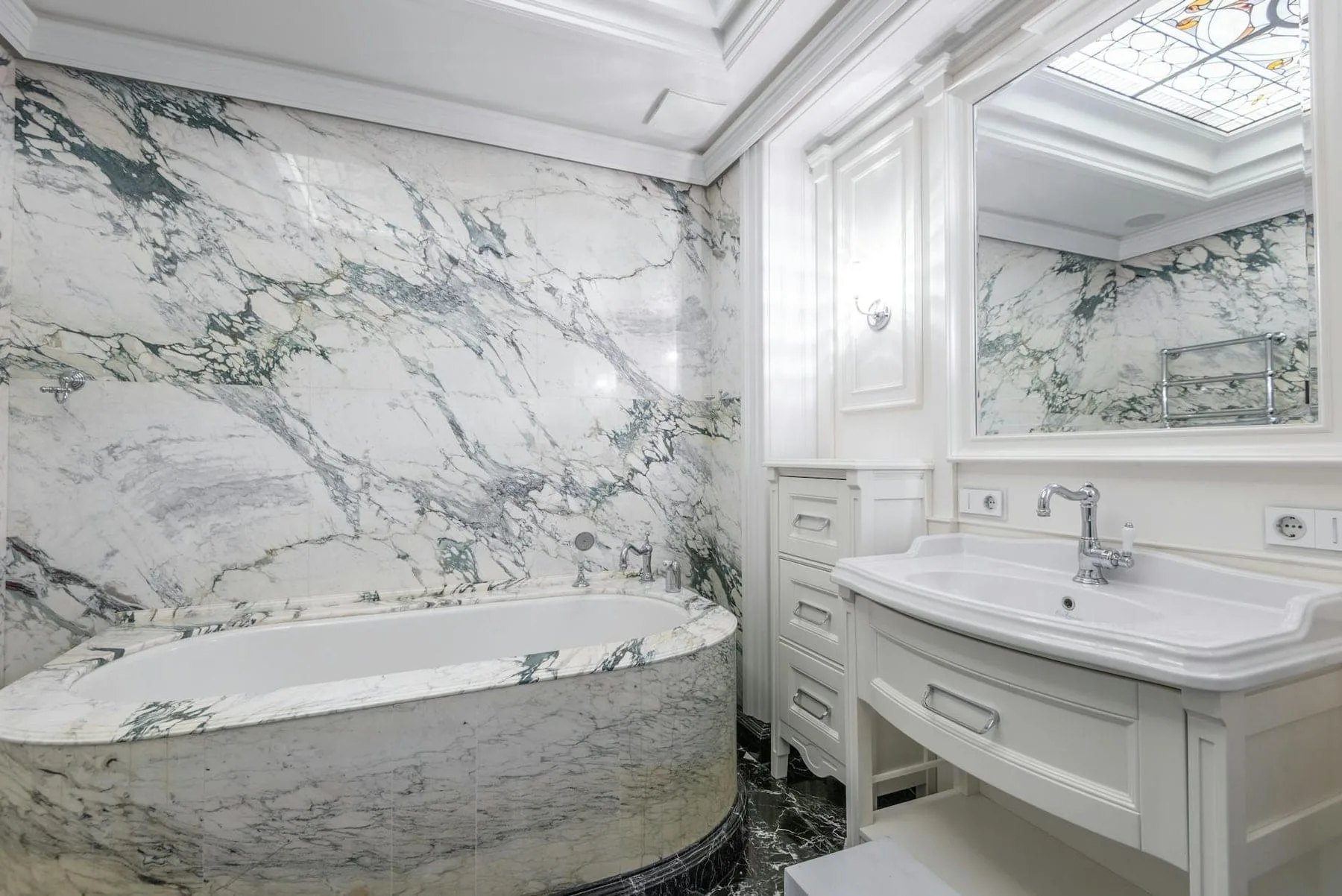
Marble & natural stone
Calacatta, Carrara, and statuario slab work. Bookmatched walls, mitred edges, waterfall vanities, custom feature niches — templated on site, fabricated locally.
-
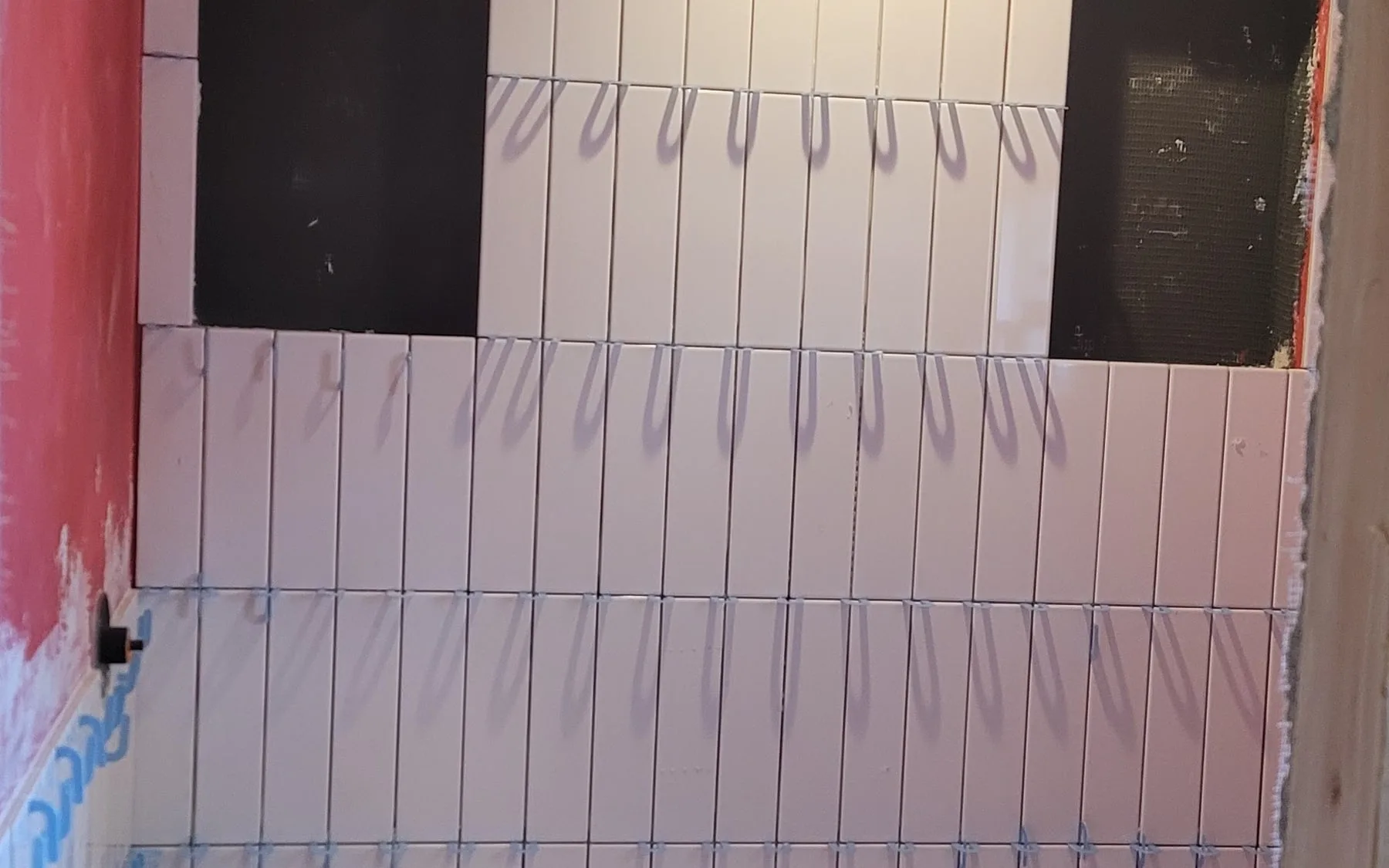
Tile installation
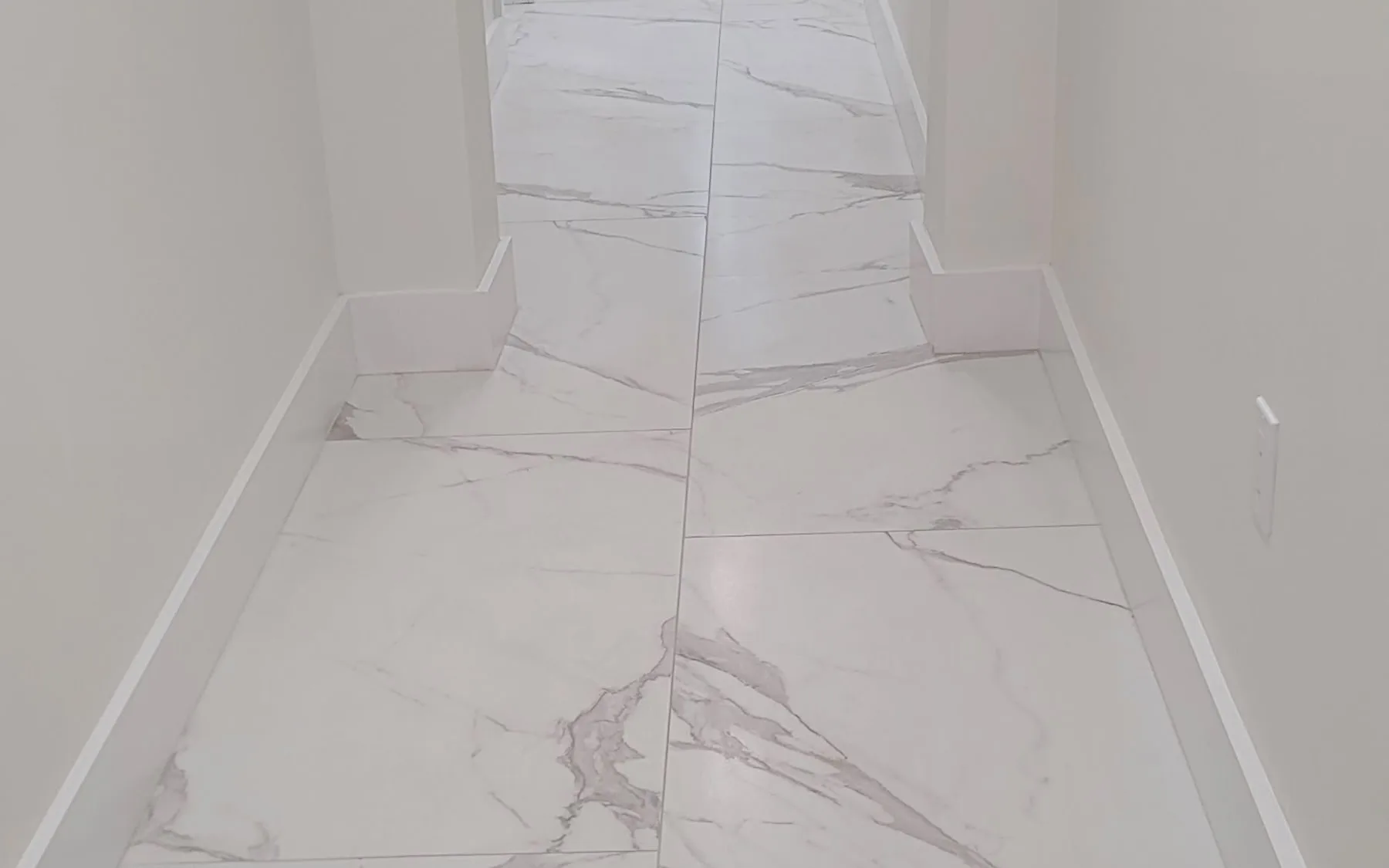
Large-format porcelain, hand-laid mosaic, hand-glazed ceramic, heated-floor systems. Schluter waterproofing under every wet wall. Hand-laid mockup before any adhesive sets.
Materials & Standards
Six standards. No shortcuts.
The unsexy part of a Manhattan remodel is what holds it together — waterproofing under tile, the membrane behind a feature wall, the pressure-tested supply line in the wall cavity. We don't compromise on any of it.
-
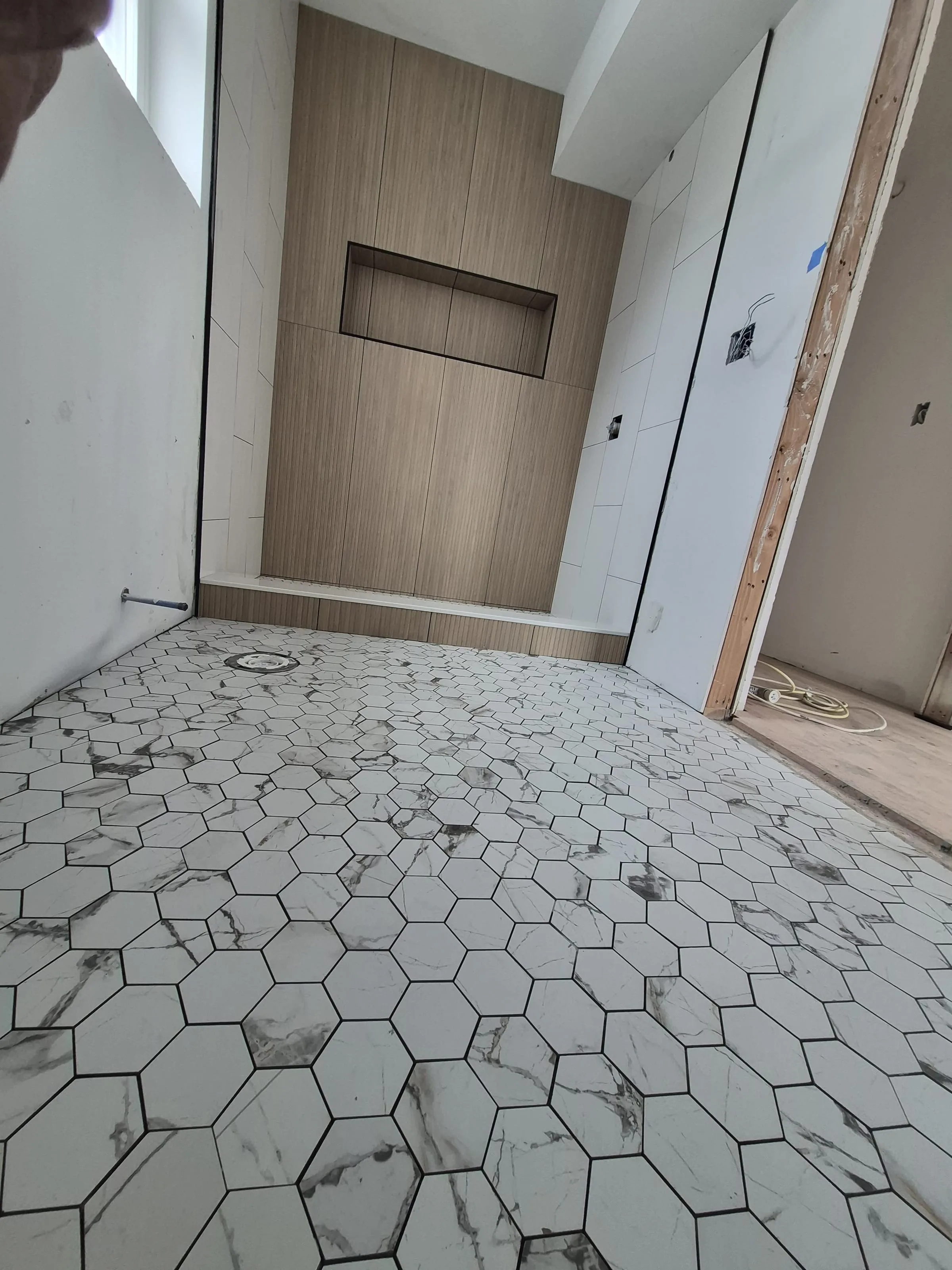
Waterproofing.
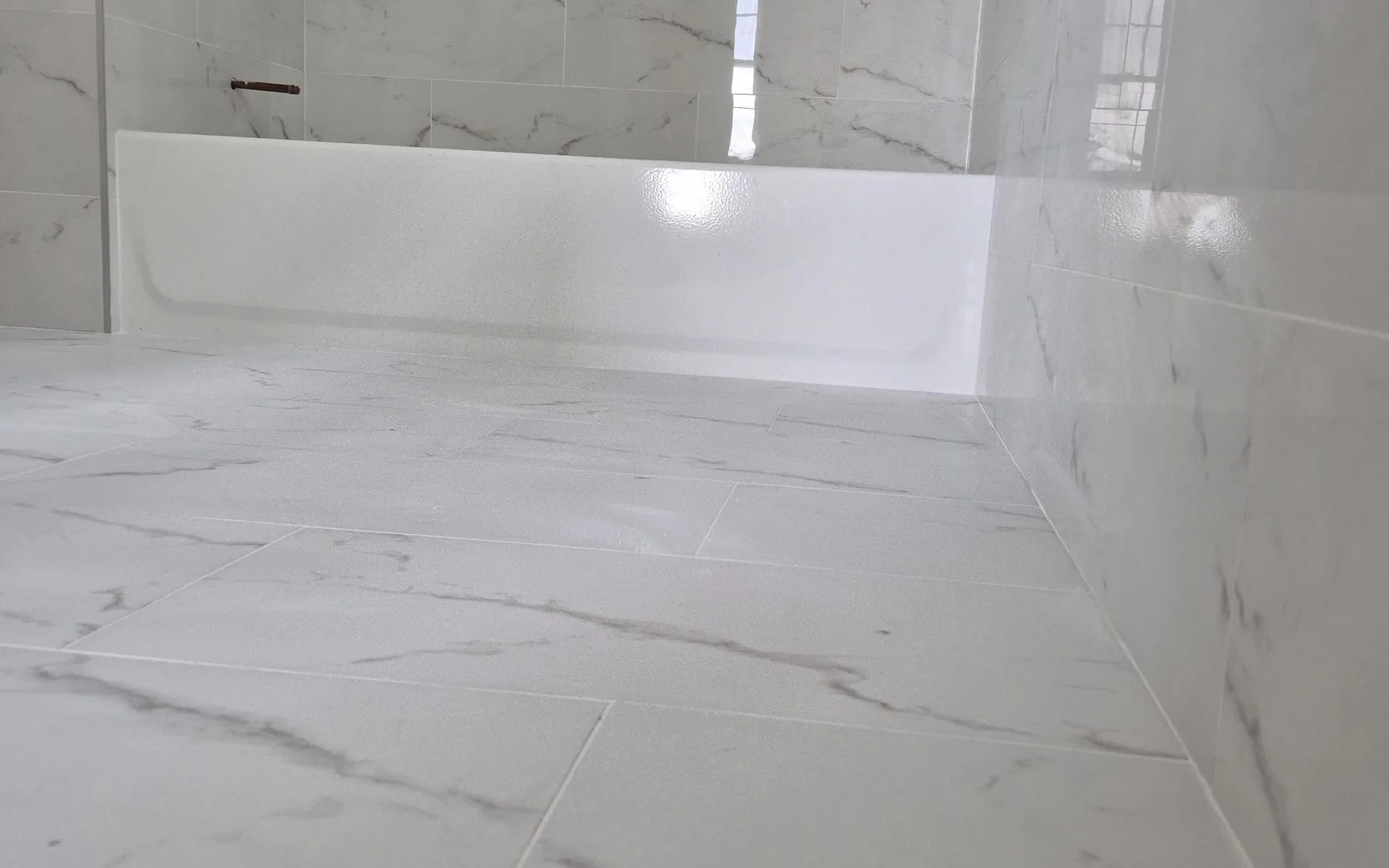
Schluter or RedGard membrane on every wet wall and shower floor. Pan slope verified before tile. Linear, point, or trough drains — same standard, no exceptions. Critical in pre-war buildings where the slab below has its own moisture history.
-
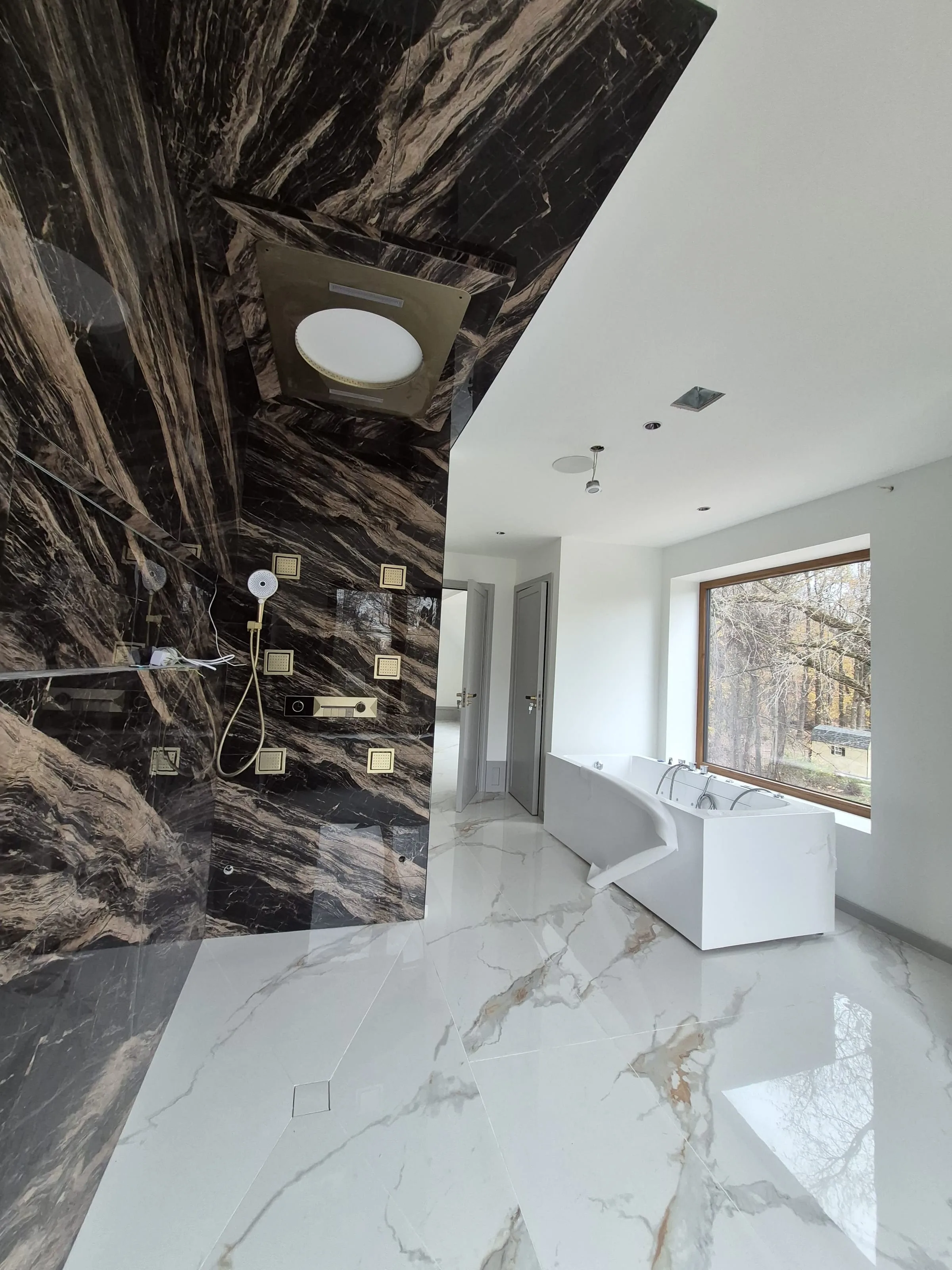
Tile.
Dry-laid mockup before adhesive. Mitred outside corners on natural stone. Hand-laid mosaic feature walls. Grout color confirmed against a wet sample before bagging.
-
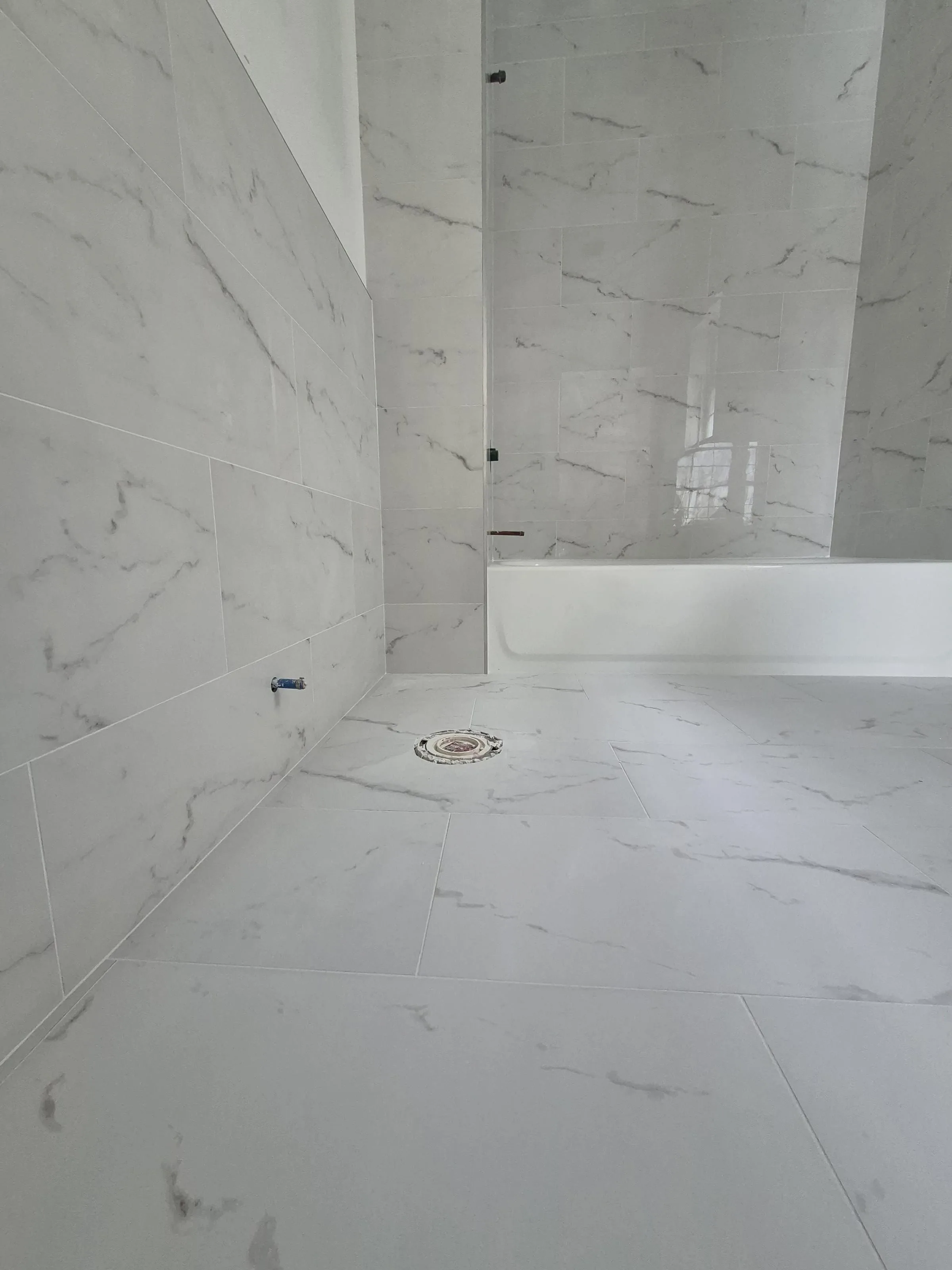
Stone.
Calacatta, Carrara, statuario slab. Bookmatched walls and waterfall vanities templated on site. Edge profiles mocked up in MDF before fabrication. Slab orientation marked before delivery so the freight elevator gets the right side first.
-
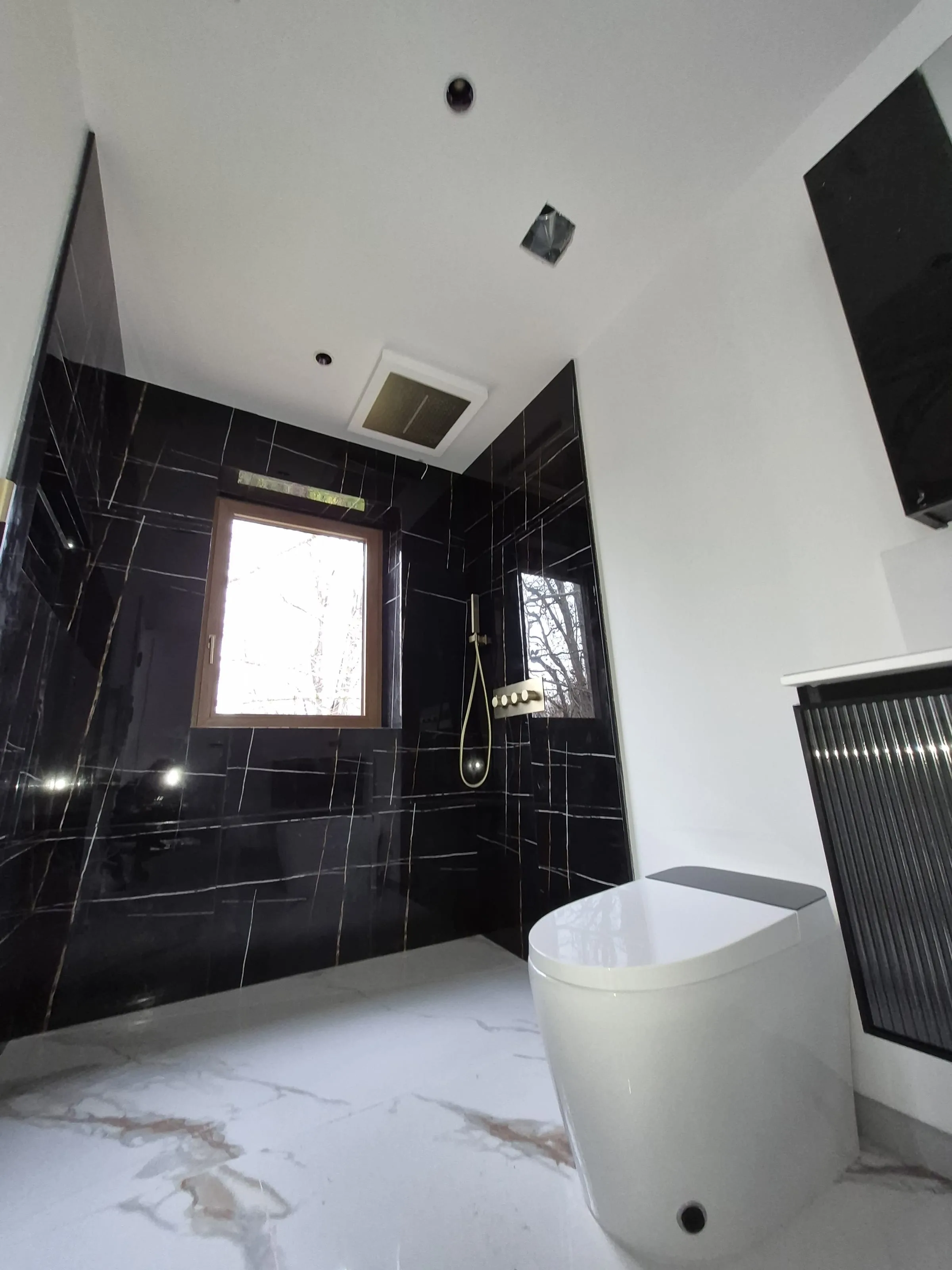
Fixtures.
Brass and bronze supply lines, pressure-tested before walls close. Premium valves, thermostatic shower controls, and smart-shower diverters — installed to manufacturer spec. DOB-compliant plumbing throughout.
-
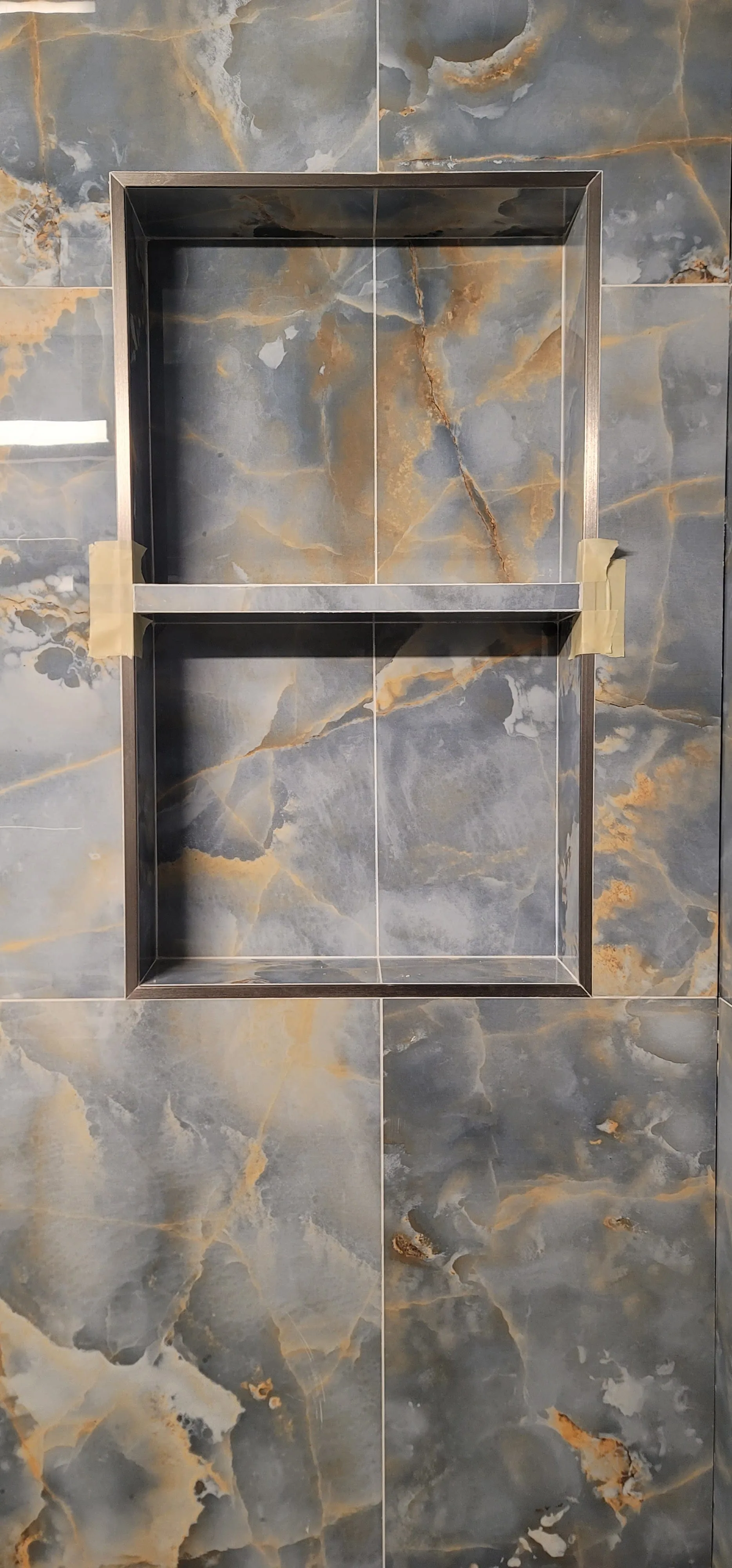
Glass & feature walls.
Frameless shower enclosures, low-iron clear glass, mitred outside corners — nothing thinner than 3/8". Lit niche details and bookmatched feature walls planned in framing, not bolted on after tile.
-
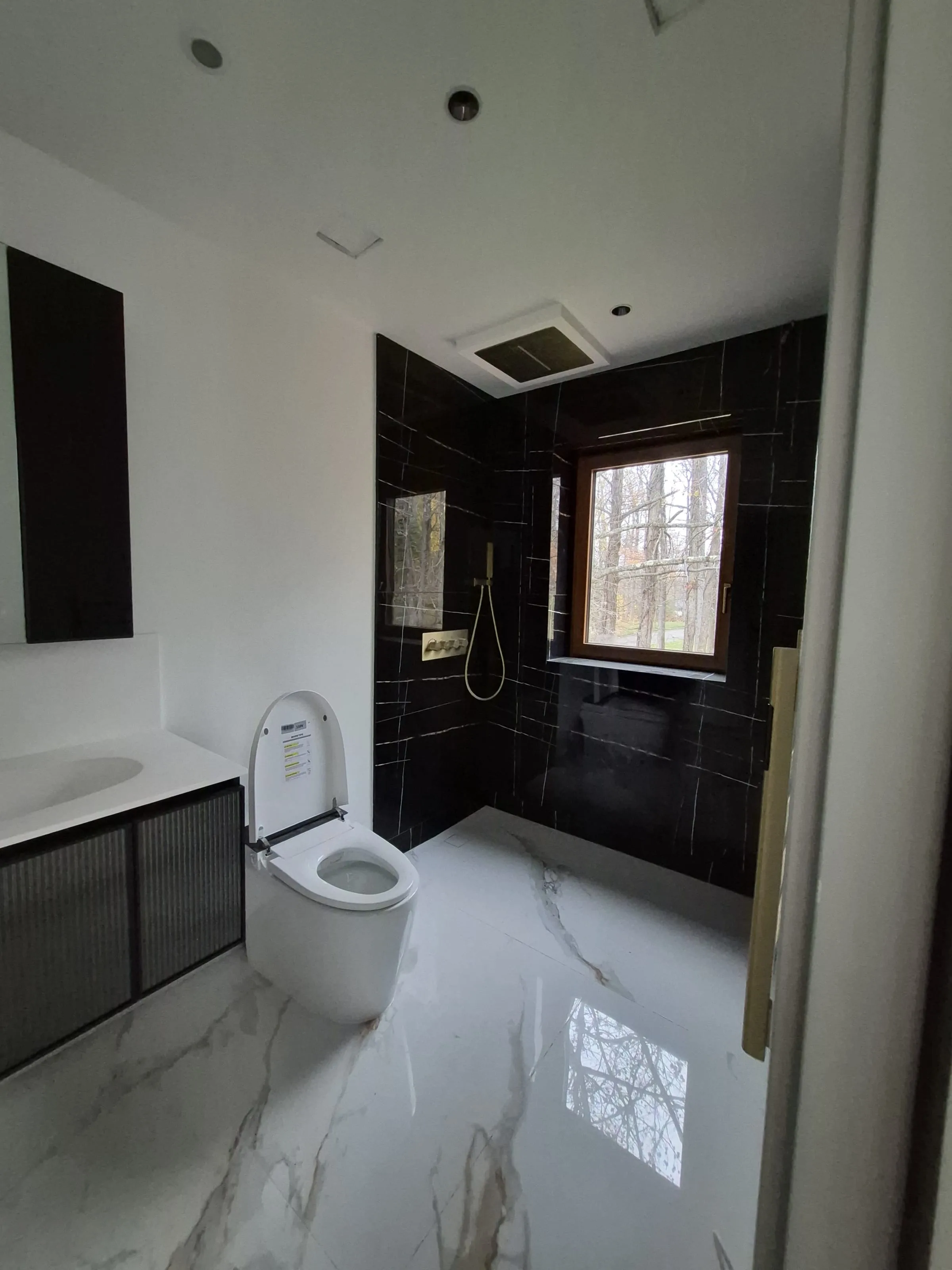
Smart-home & lighting.
Heated electric or hydronic floors, app-controlled shower valves, pre-wired smart mirrors, motion-sensor niche lighting, integrated audio. Roughed in during framing, never after tile.
Process
Four steps. No surprises.
Same four-step process as every project, but Manhattan adds a longer pre-build phase: the alteration agreement, the DOB filing, and the building-rules walkthrough all run before demo. We sequence them so demo starts the day the package is approved.
-
Free consultation
On site or by video. We measure, photograph the existing space, and walk through scope. Same-day response on most inquiries.
-
Design and scope
Drawings, finish selections in three tiers, and a written line-item proposal. You see exactly what’s in and what’s out before you sign.
-
Build
Floor protection in place before tools arrive, dust barriers up before demo. In-house tile and stone setters, trusted licensed plumbers, daily clean-down.
-
Walk-through and warranty
Final punch, deep clean, and the 2-year written workmanship warranty. Pass-through manufacturer warranties on tile, fixtures, and cabinetry.
Featured Projects
Recent Manhattan builds. Built to last.
A few recent Manhattan builds — pre-war co-op work and modern condo renovations. Each links to a full case study with the alteration-agreement timeline, materials list, and build sequence.
Service Areas
Where we build.
We’re based in Newark, NJ, and we work across the NYC metro from there. Five boroughs, Long Island, Yonkers, and northern New Jersey are all on the standard route.
And 30+ surrounding cities within a 50-mile radius of Newark, NJ
FAQs
Manhattan-specific questions.
Co-op boards, alteration agreements, building work hours, freight elevator scheduling, DOB filings — the things that decide whether a Manhattan remodel ships on time.
Do you work in Manhattan co-ops?
Yes — co-op work is a substantial share of our Manhattan portfolio. We prepare the alteration agreement package (drawings, contractor insurance certificates, contractor licensing disclosures, scope-of-work narrative), submit to your managing agent or board, respond to comments, and follow up until written approval is in hand. Most Manhattan co-op approvals run 2 to 8 weeks. We've worked with most of the major Manhattan managing agents.
Can you remodel a Manhattan pre-war apartment?
Yes. Pre-war apartments — pre-1940 construction — are a regular part of the Manhattan portfolio. Plaster walls, original cast-iron drain stacks, steel-frame structural elements behind the plaster, original casement windows, and original hardwood are all things we've handled often. We restore where possible and replace only when restoration isn't feasible.
What about freight elevator scheduling and lobby protection?
Standard practice. We coordinate freight elevator reservations directly with building staff, schedule deliveries (cabinetry, slab stone, appliances) for the freight, and protect lobbies and corridors with floor and wall covers. Building freight fees are pass-through line items in your contract — we don't mark them up.
How do Manhattan building work hours affect the timeline?
Most Manhattan buildings allow construction Monday through Friday, 9 AM to 4 PM. Some allow Saturday morning hours; many don't. Sundays and holidays are off. Hammering, drilling, and demo are restricted to specific windows in some buildings. We schedule the build around your specific building's rules — we ask for the building handbook on the consultation.
Do you file DOB permits for Manhattan work?
Yes. NYC's Department of Buildings requires permits for any plumbing, electrical, gas, or structural work. Permits requiring NYC HIC and DOB credentials are filed by our long-term NY-licensed master plumber and electrician partners under their licenses; we manage every inspection and close out the permit at completion. Cosmetic-only work in the same footprint typically doesn't need a permit. The alteration agreement and the DOB filing are separate processes that we handle in parallel.
What types of Manhattan projects do you do most often?
Bathroom and kitchen remodels in co-ops and condos, full apartment gut renovations, and pre-war restoration work. Townhouse renovations are less frequent (most Manhattan housing stock is multi-family) but in scope when they come up. Combination renovations — two adjacent units combined into one — happen once or twice a year and require their own DOB filing.
How long is the drive from your Newark headquarters to Manhattan?
About 30 to 45 minutes door-to-door via the Holland Tunnel or Lincoln Tunnel, depending on traffic. Our trucks roll out of Newark every weekday and route into Manhattan based on the project's location. Site visits are typically scheduled in the morning to avoid afternoon tunnel traffic.
Do you handle insurance certificates with the limits Manhattan buildings require?
Yes. Most Manhattan buildings require a contractor's certificate of insurance naming the building, the managing agent, and any related entities as additional insureds, with specific liability limits ($1M/$2M is common, $5M required by some high-end full-service buildings). Our COIs are issued by request from the broker and sent directly to your managing agent. We do this multiple times a month — it's standard.
Project intake