
What we build on Long Island
Eight disciplines. One standard.
Single-family additions, full-house renovations, and kitchen and bath gut work make up most of the Long Island portfolio. Same standard whether the project is a shed dormer in central Nassau or a North Shore second-story add-on with a new master suite.
-
Home additions
The dominant Long Island project type. Dormers, second-story add-ons, bump-outs, and integrated garage additions on detached single-family stock. Township permit filed under our license; structural engineer and architect coordination handled in scope.
-
Bathroom remodeling
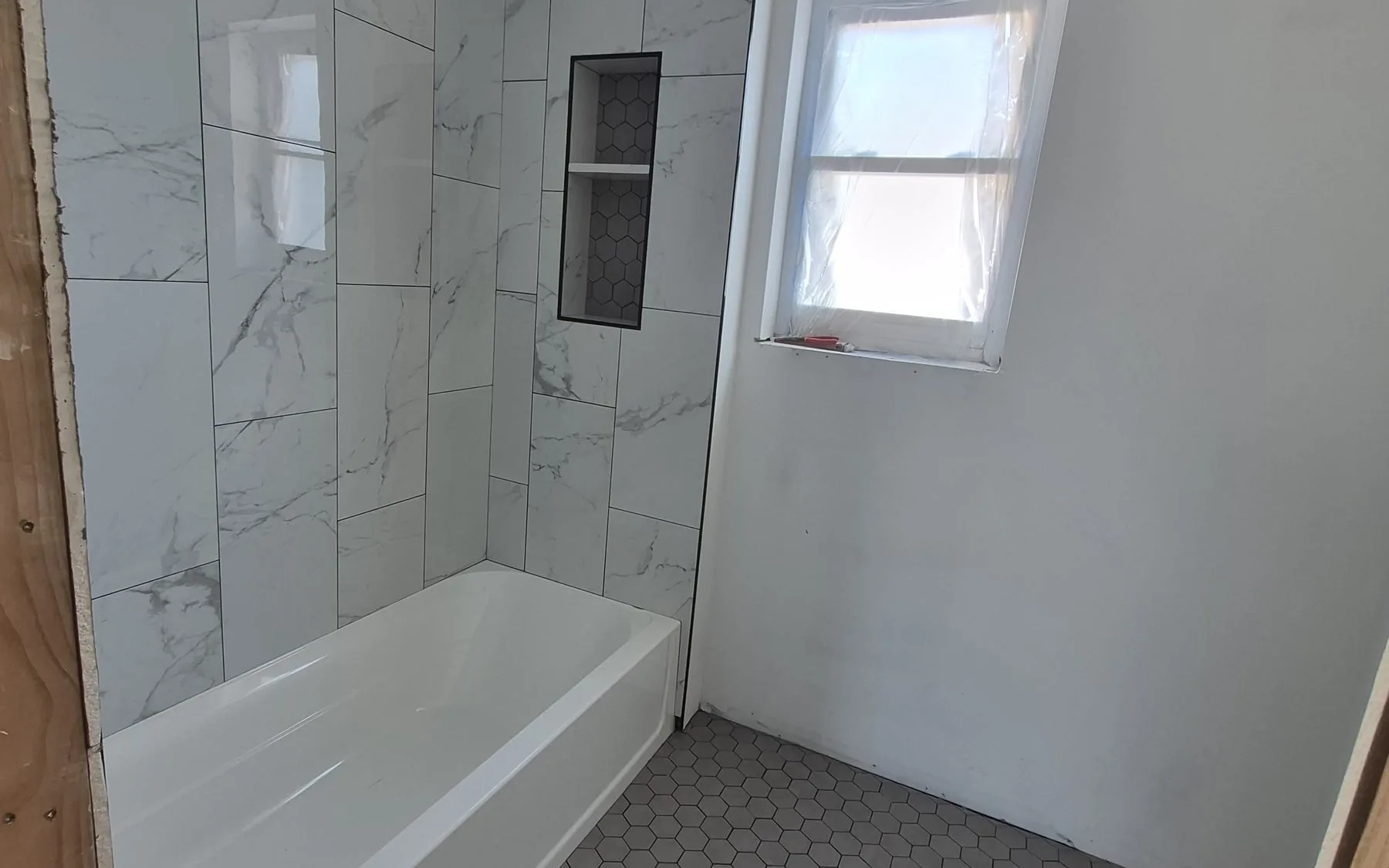
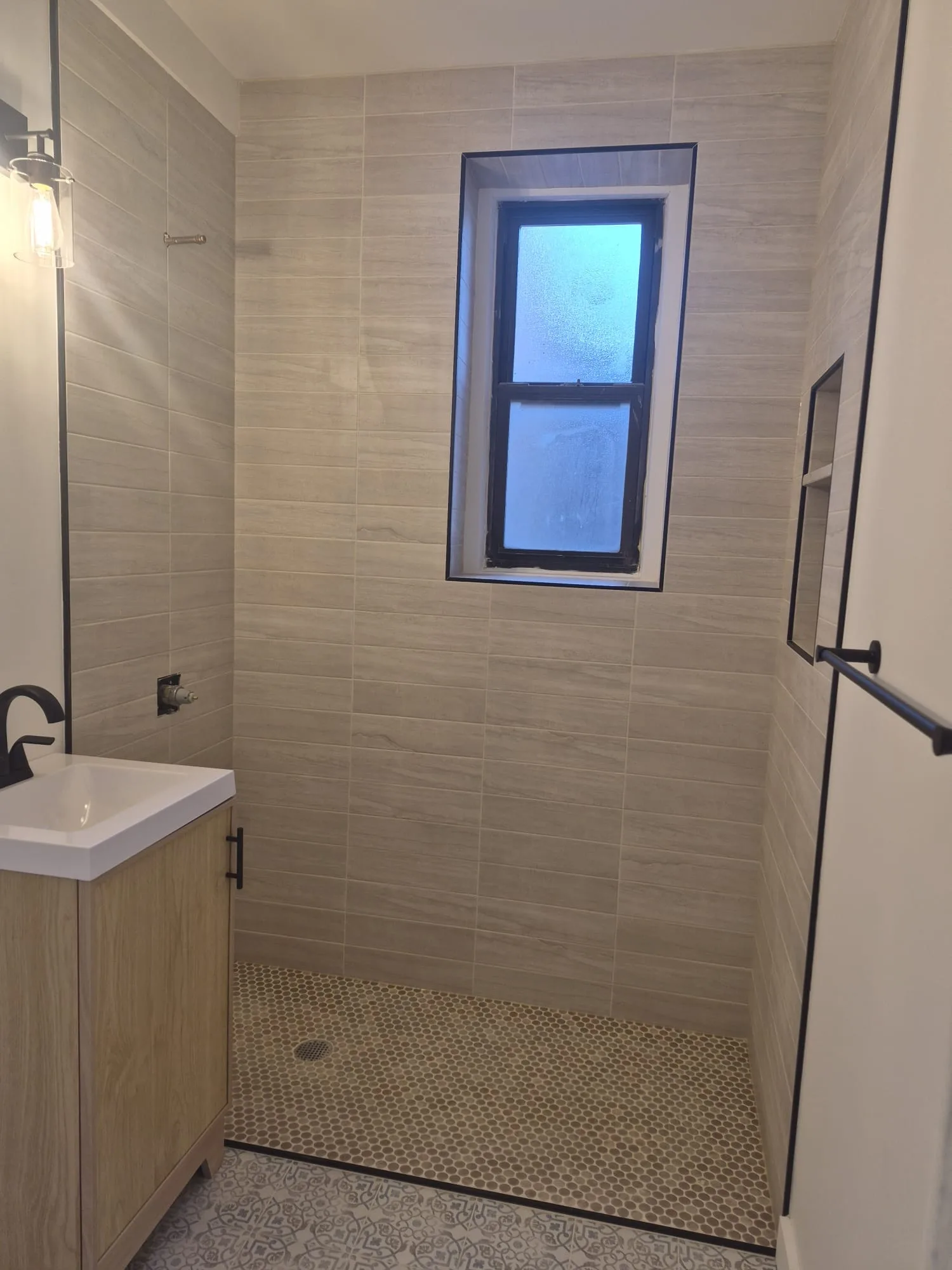
Primary suites, secondary baths, and powder rooms across post-war ranches, 1920s colonials, and newer construction. Full Schluter waterproofing under every wet wall — same standard regardless of the home's era or value tier.
-
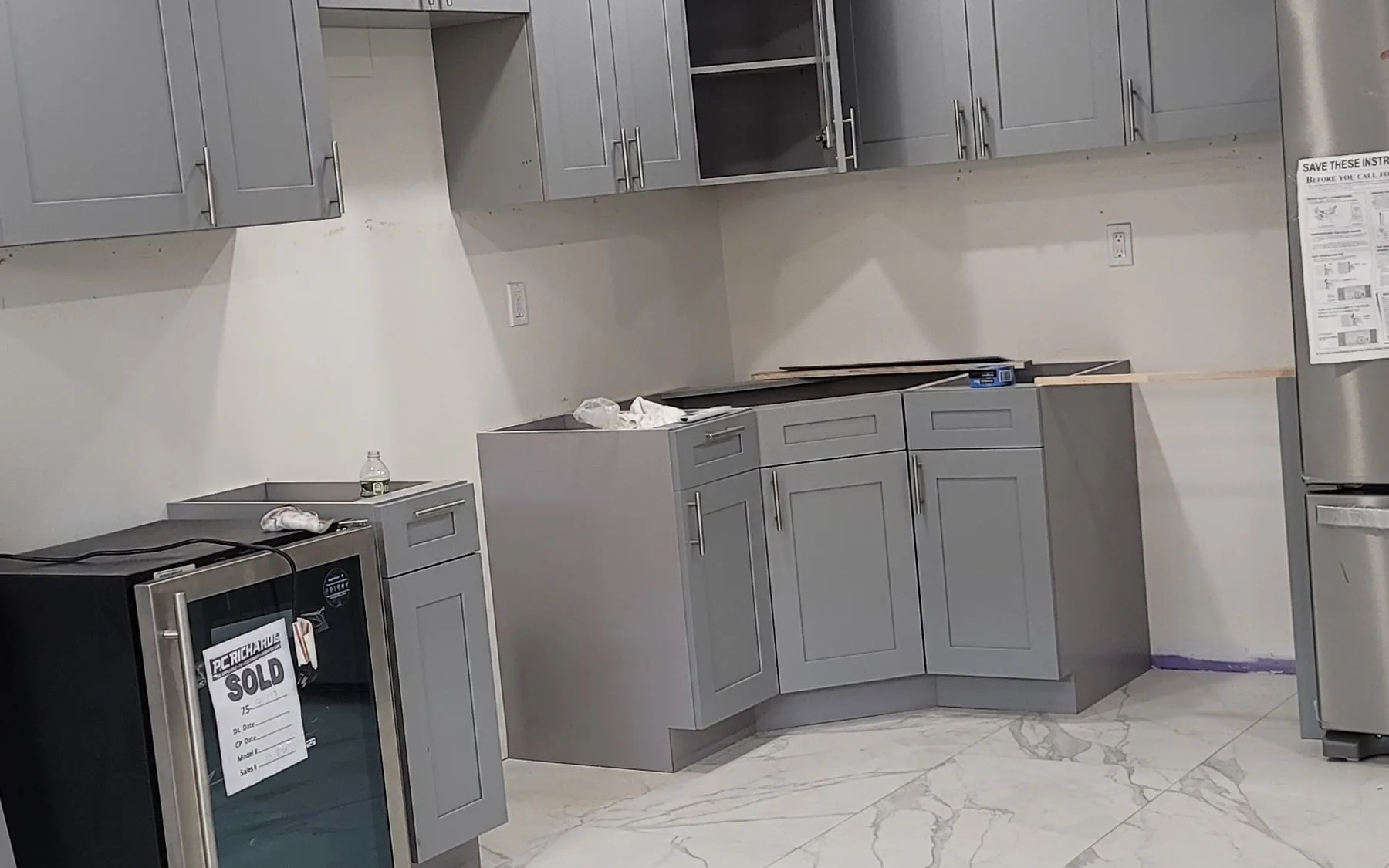
Kitchen remodeling
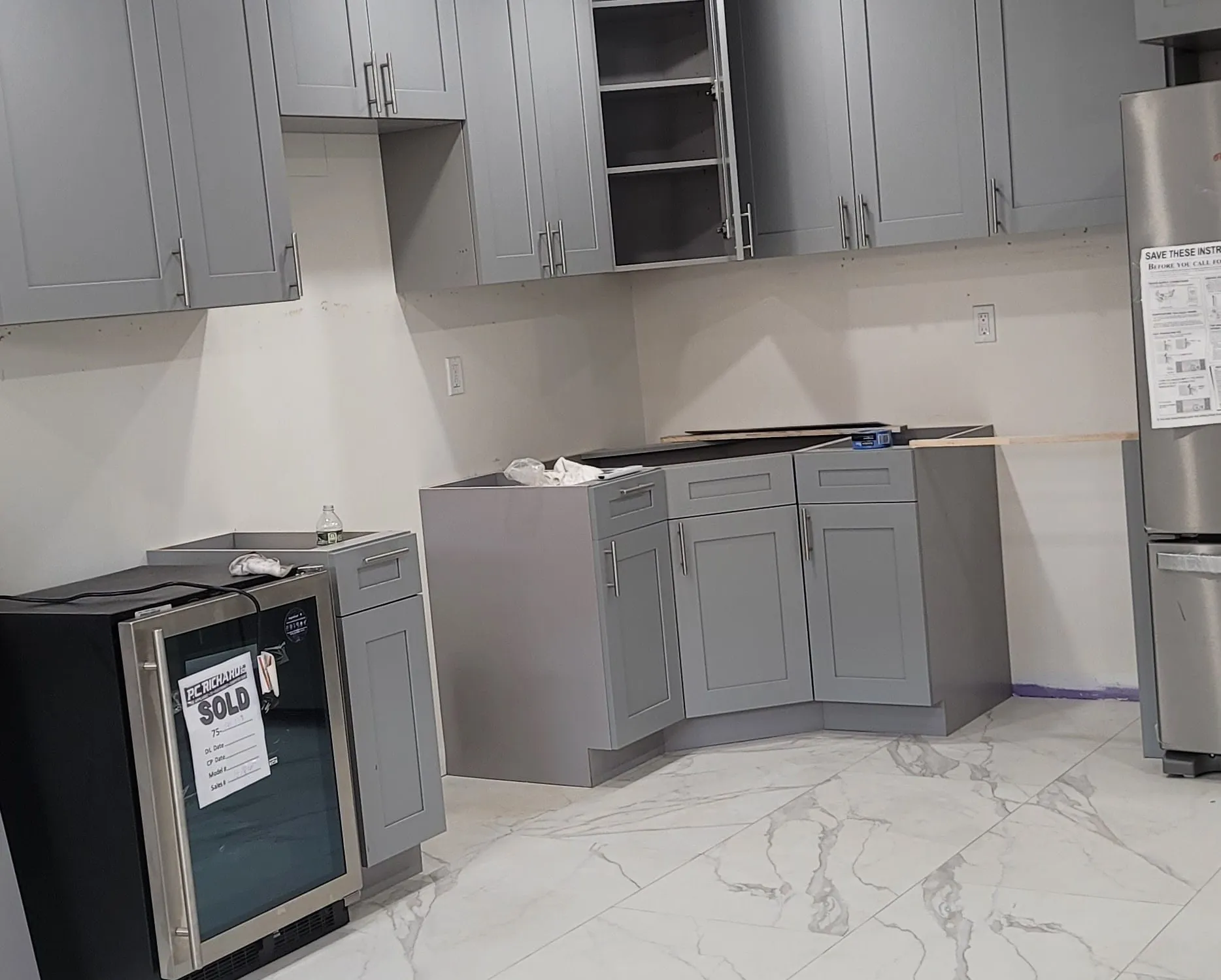
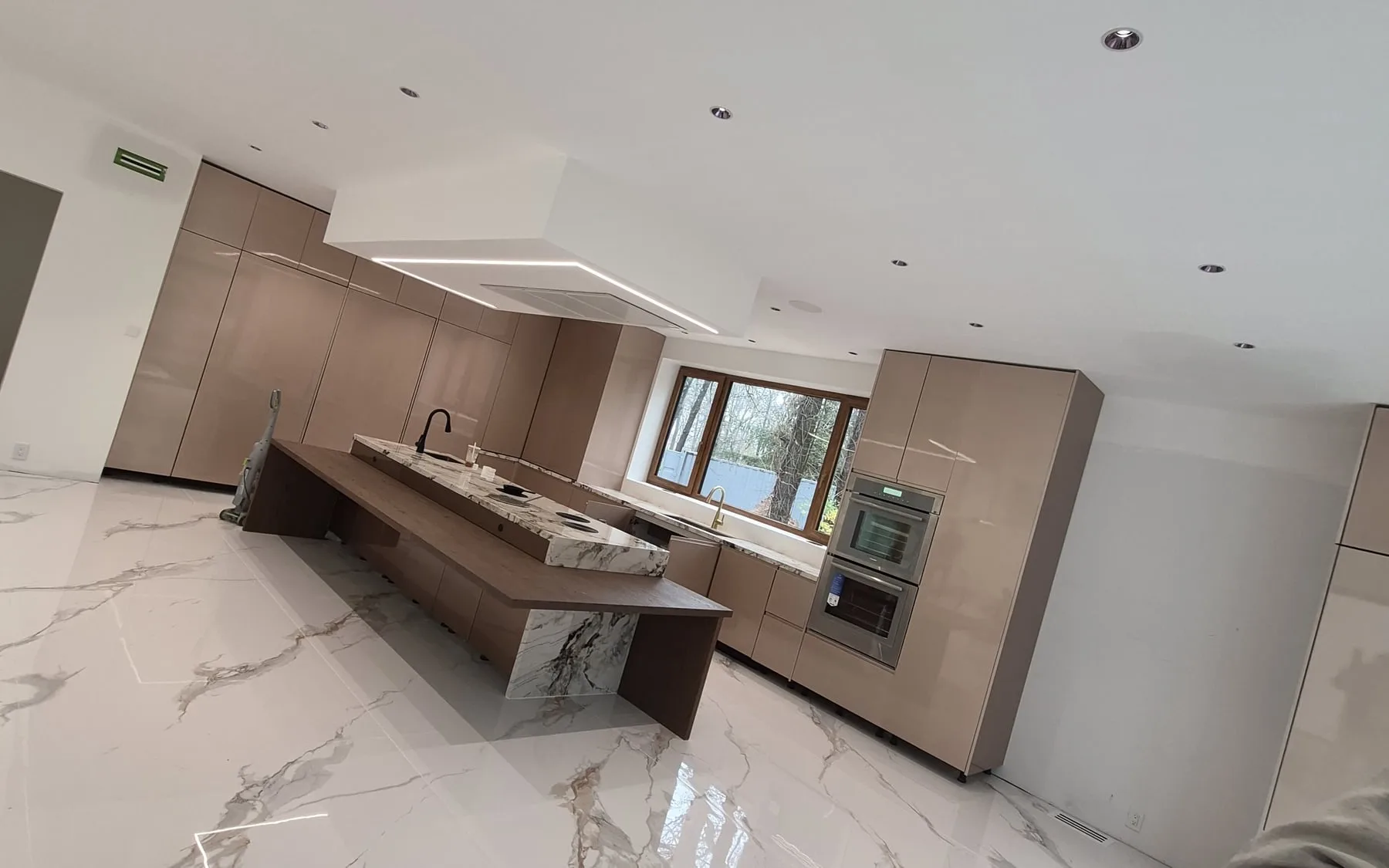
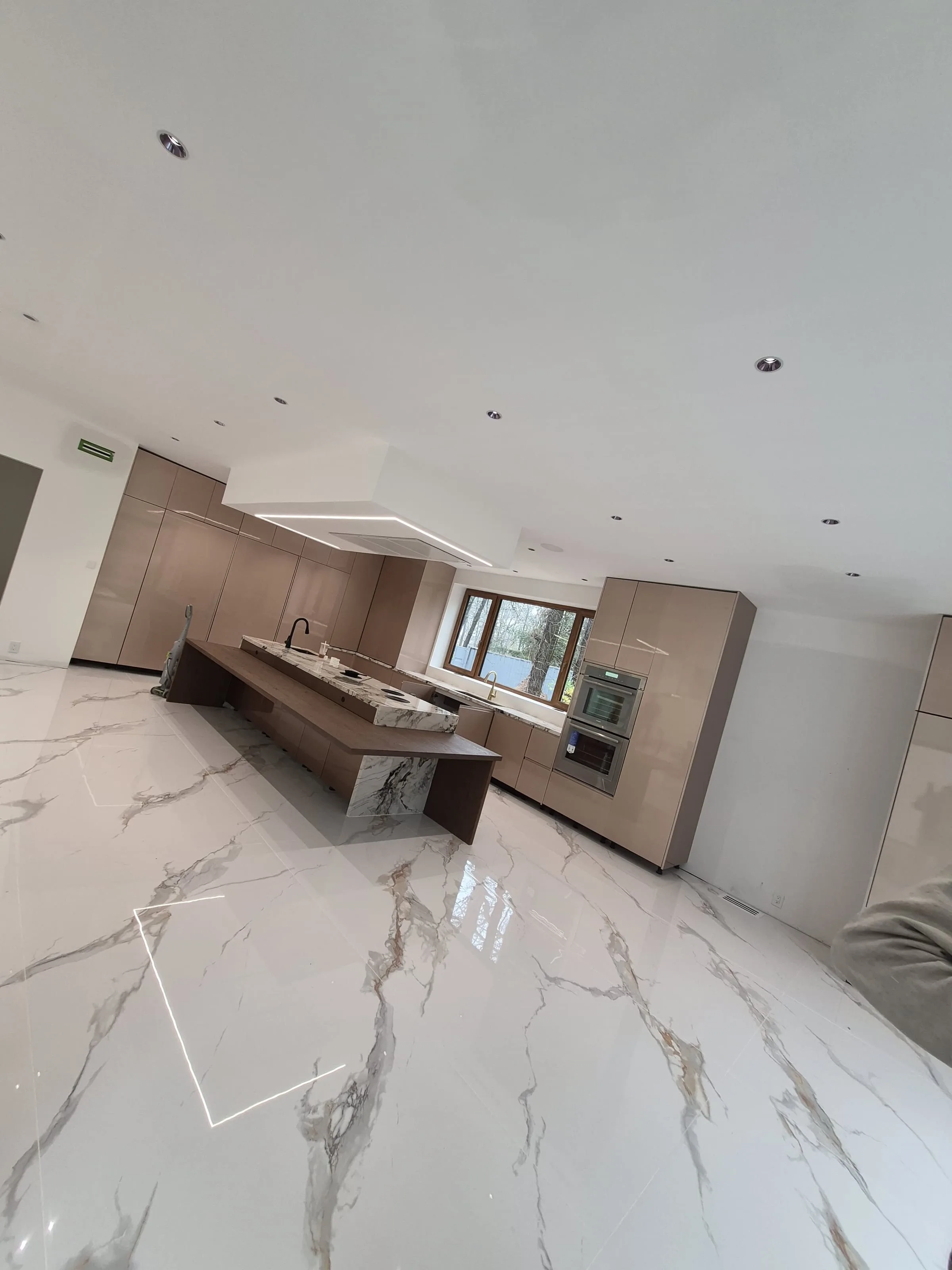
Custom cabinetry, slab quartz or marble countertops, and load-bearing wall removals with structural-engineer beam designs for the open-plan kitchen-family-room flow most Long Island homeowners want.
-
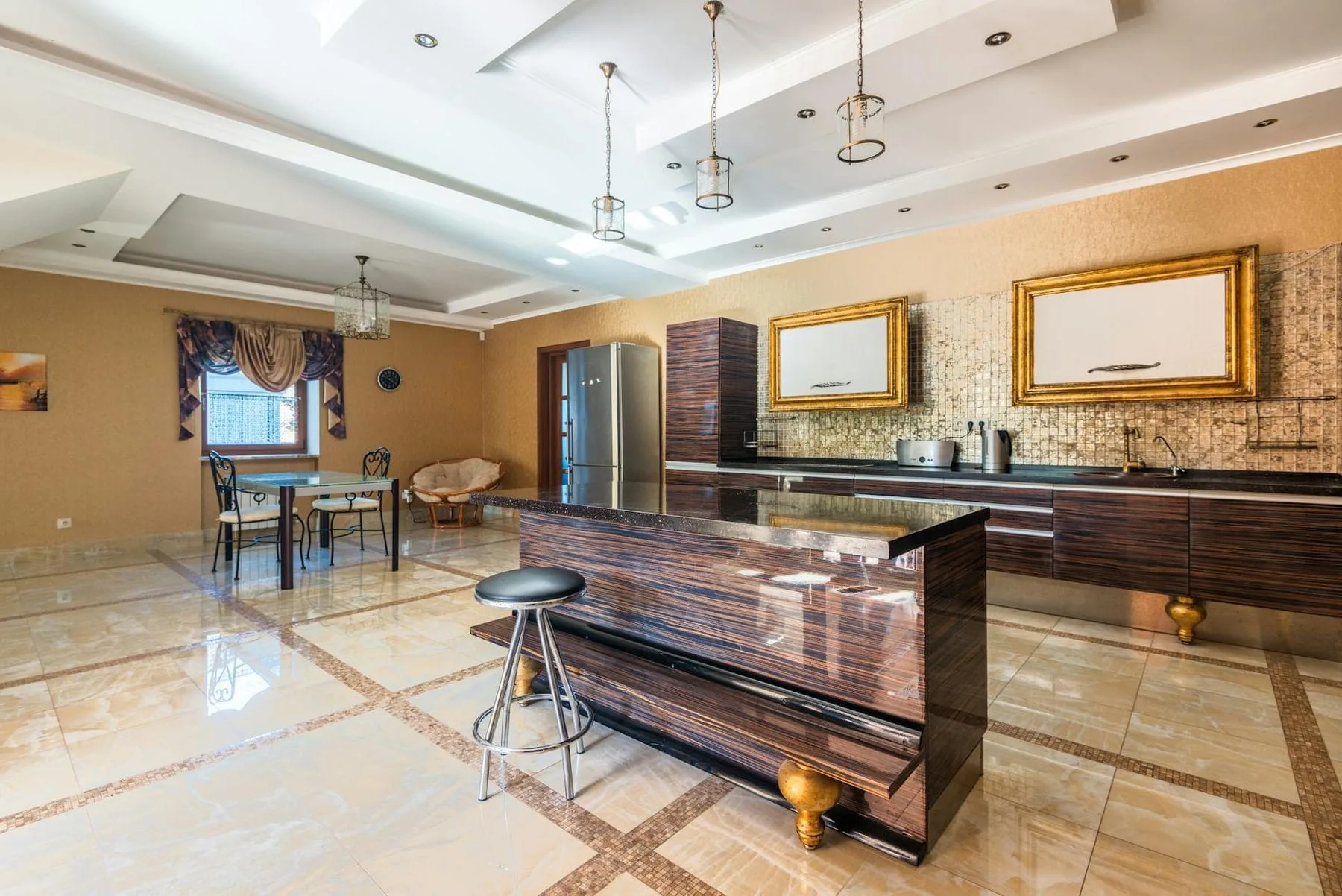
Full home remodeling
Single-family whole-house gut renovations across Nassau and western Suffolk. Owner-direct decisions, township permits we file, driveway-based logistics, and full basements available for material staging — often paired with a second-story or dormer addition.
-
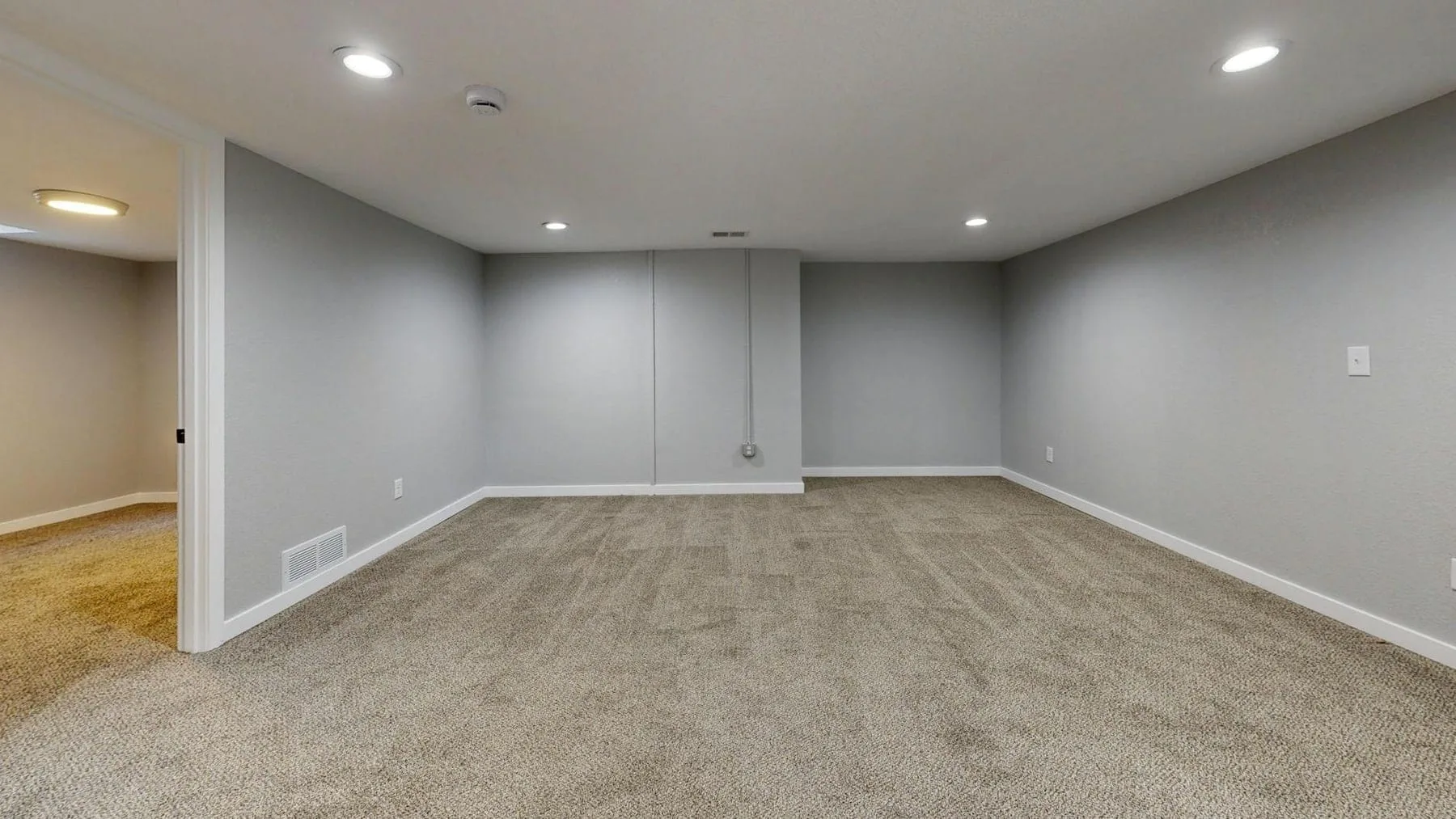
Basement remodeling
Most Long Island single-family homes have full basements. Family rooms, home theaters, in-law suites, and walk-out basements where grade allows. Waterproofing assessment first; code review for ceiling height and egress windows before build-out.
-
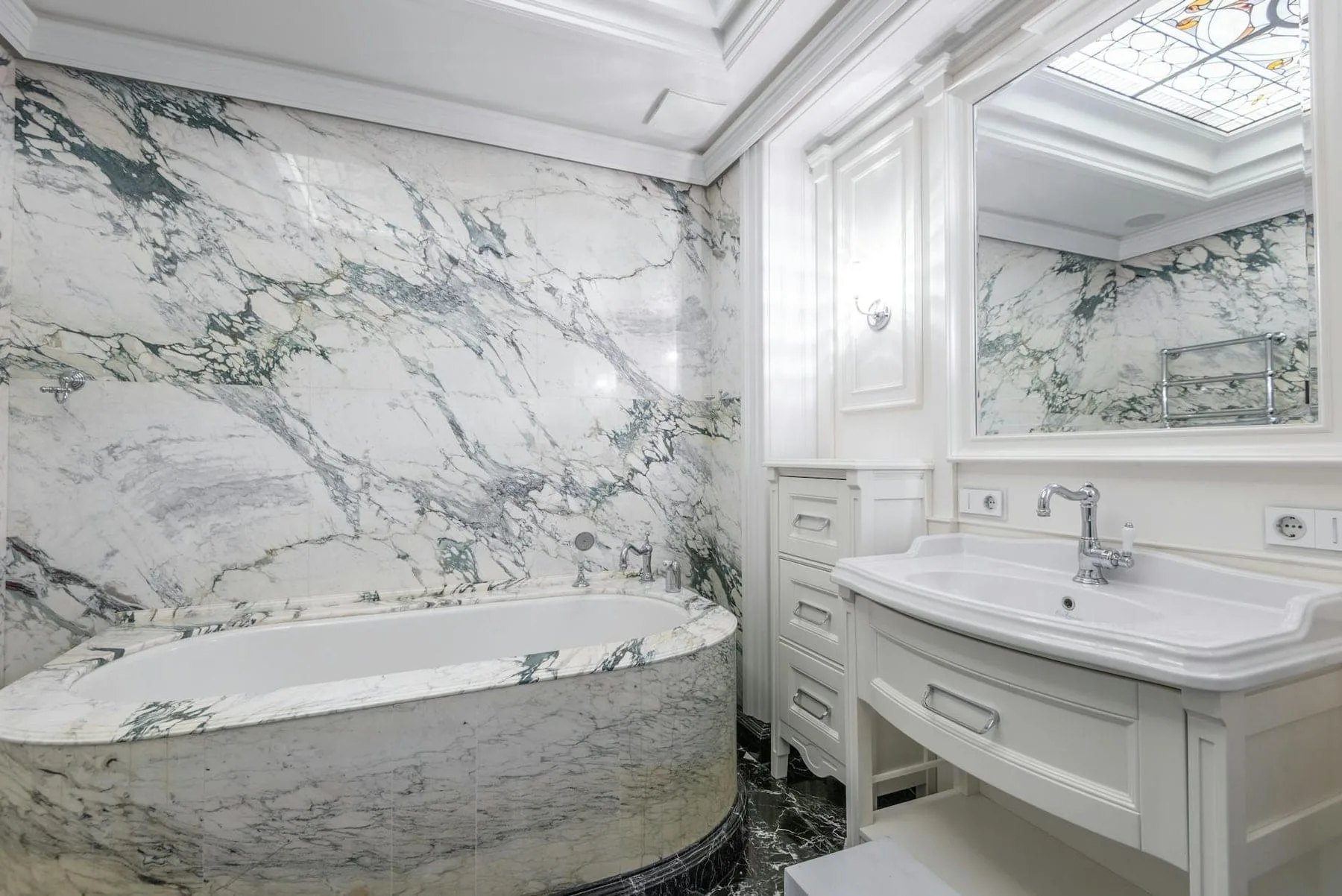
Marble & natural stone
Calacatta, Carrara, and statuario slab work. Bookmatched walls, mitred edges, waterfall vanities, and custom feature niches — templated on site, fabricated locally, slab orientation marked before delivery.
-
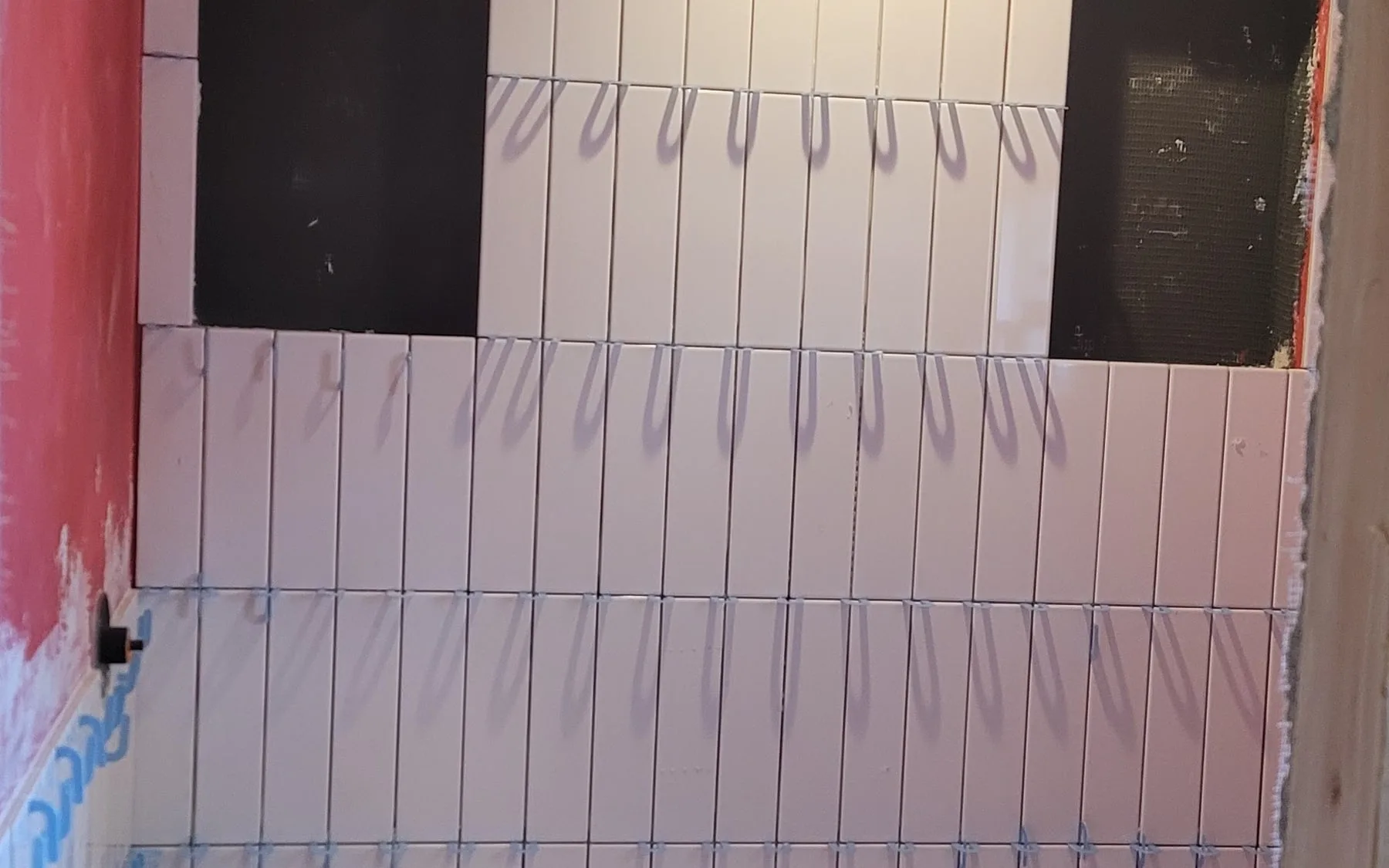
Tile installation
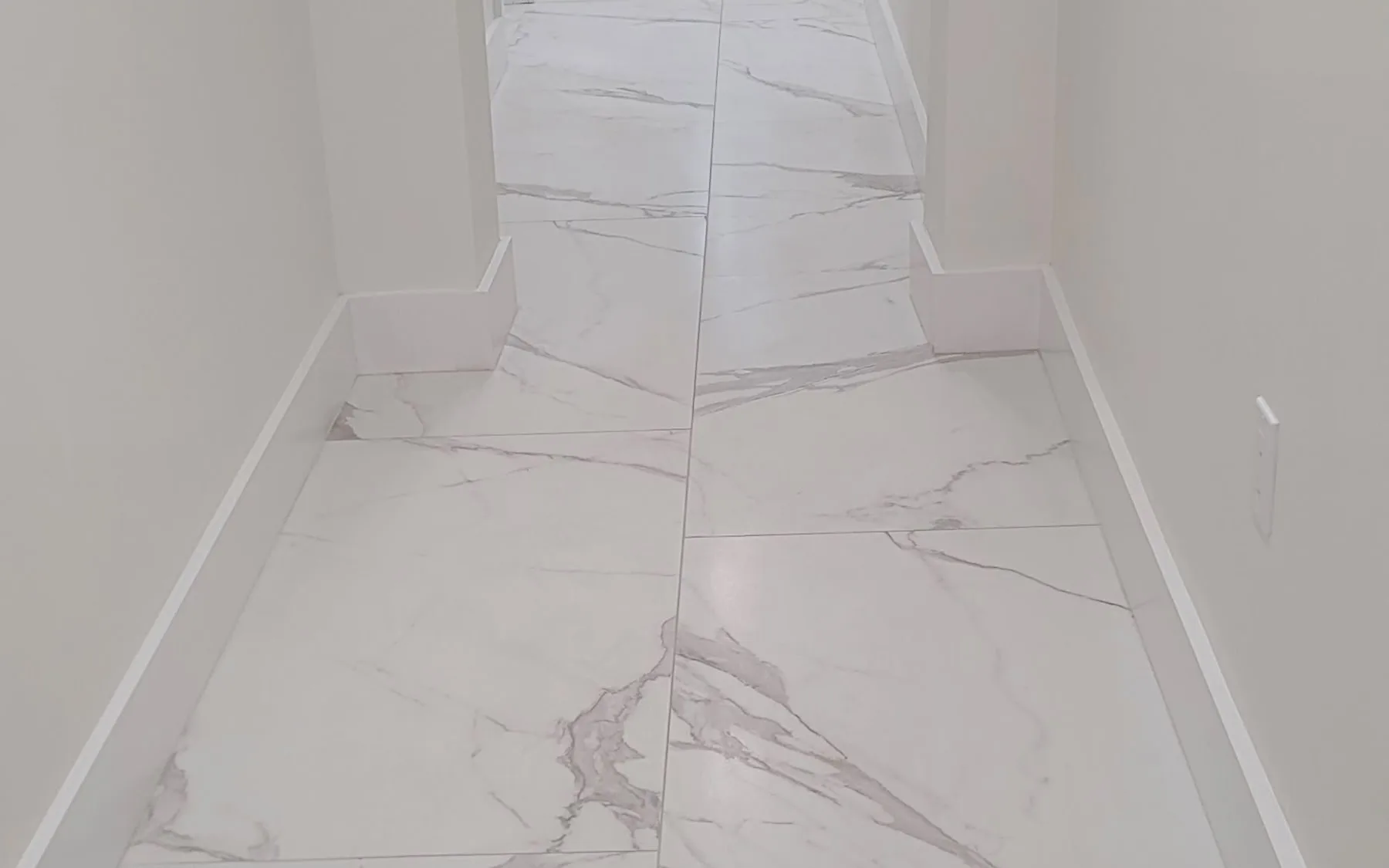
Large-format porcelain, hand-laid mosaic, hand-glazed ceramic, and heated-floor systems. Schluter waterproofing under every wet wall. Hand-laid mockup before any adhesive sets.
-
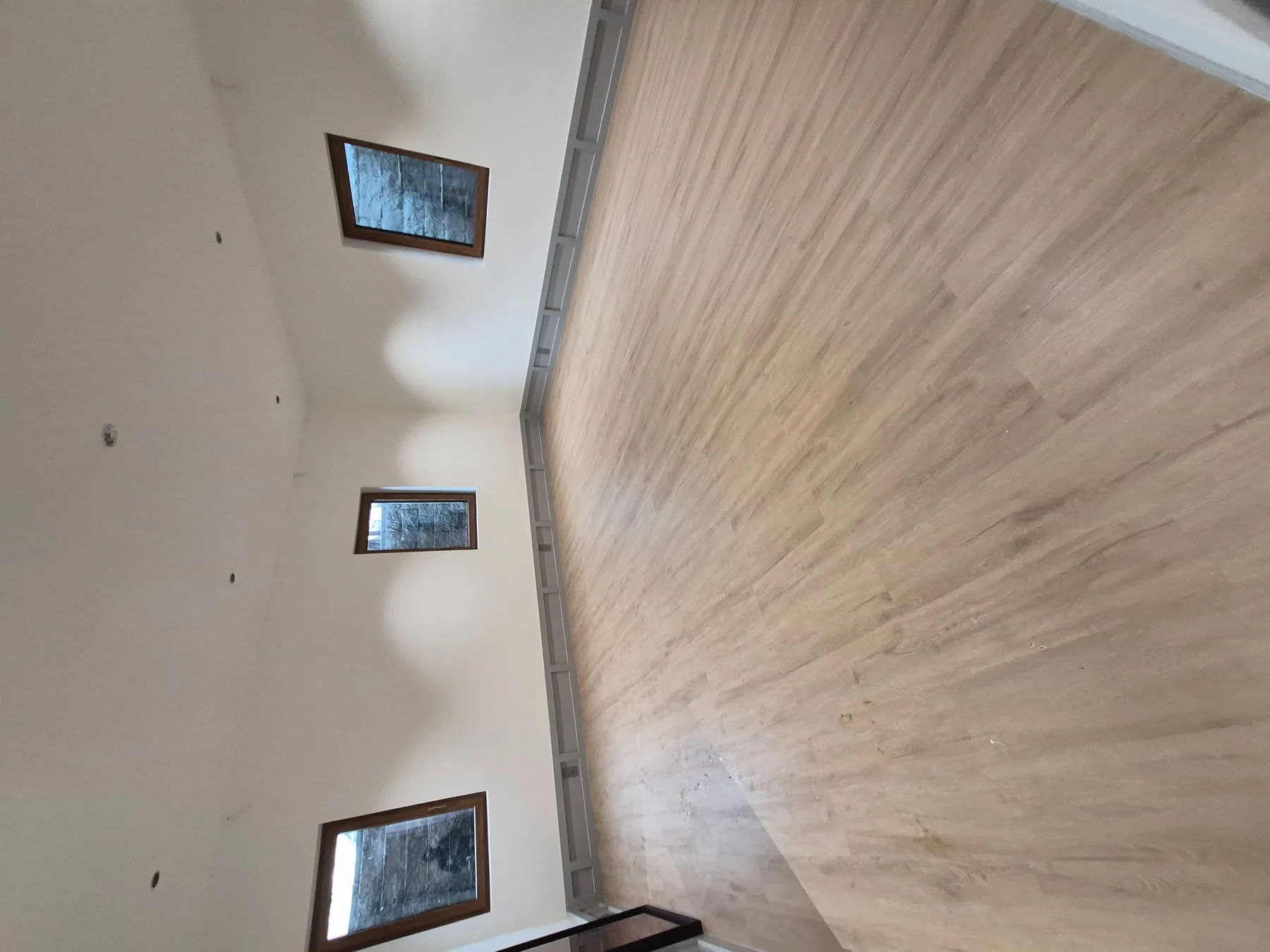
Flooring installation
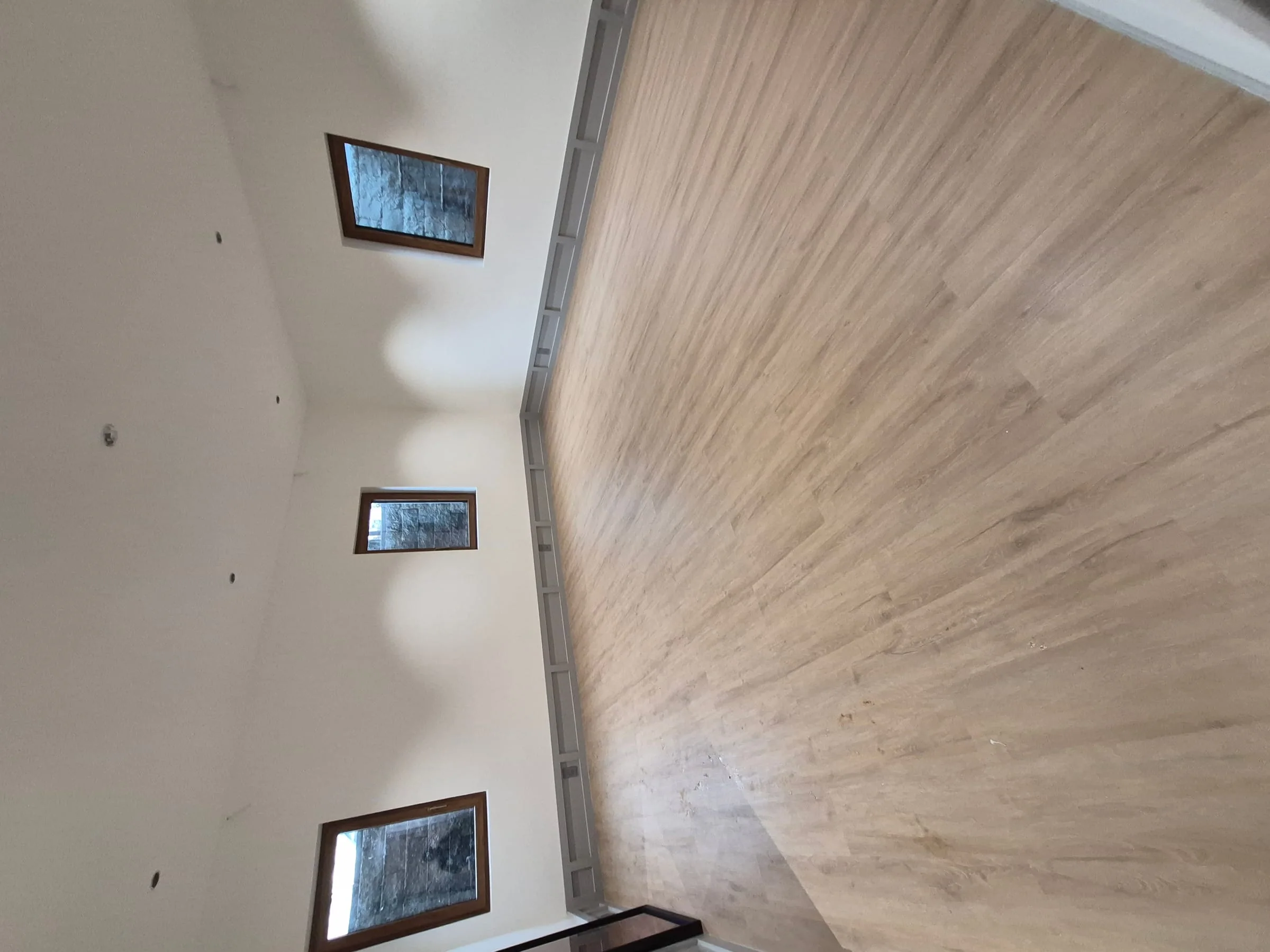
Wide-plank engineered wood, white oak and red oak hardwoods, and sand-and-refinish on original parquet in older Nassau colonials. Acoustic underlayment for upper-floor and addition tie-ins.
Materials & Standards
Six standards. No shortcuts.
What holds a Long Island remodel together is the part nobody photographs — the waterproofing under tile, the membrane behind a feature wall, the pressure-tested supply line in a 1950s ranch wall. Same standard on a single-bath refresh or a North Shore whole-house gut.
-
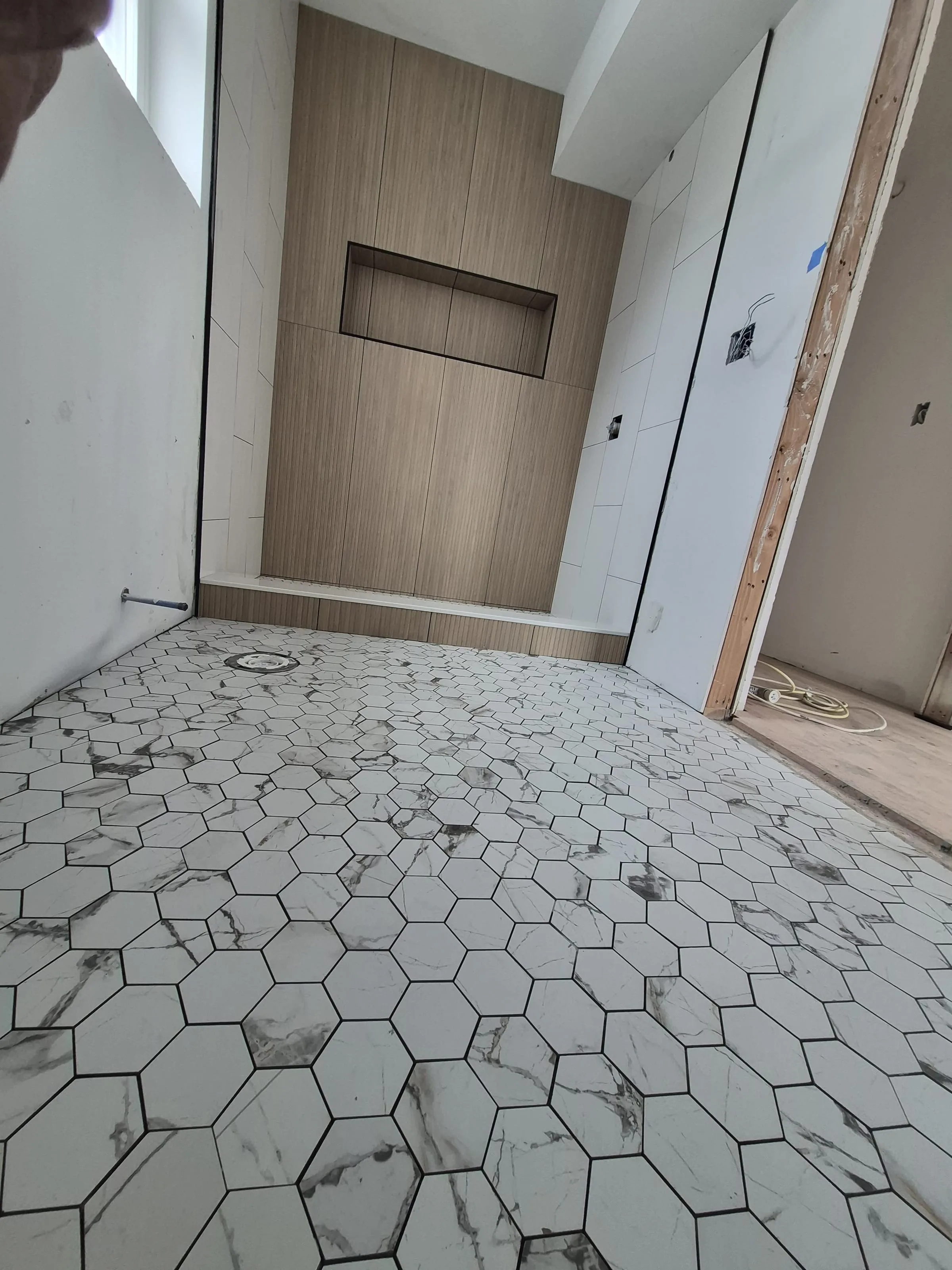
Waterproofing.
Schluter or RedGard membrane on every wet wall and shower floor. Pan slope verified before tile. Linear, point, or trough drains — same standard, no exceptions. Critical in older Long Island homes on septic systems where any moisture path back to the basement compounds the risk.
-
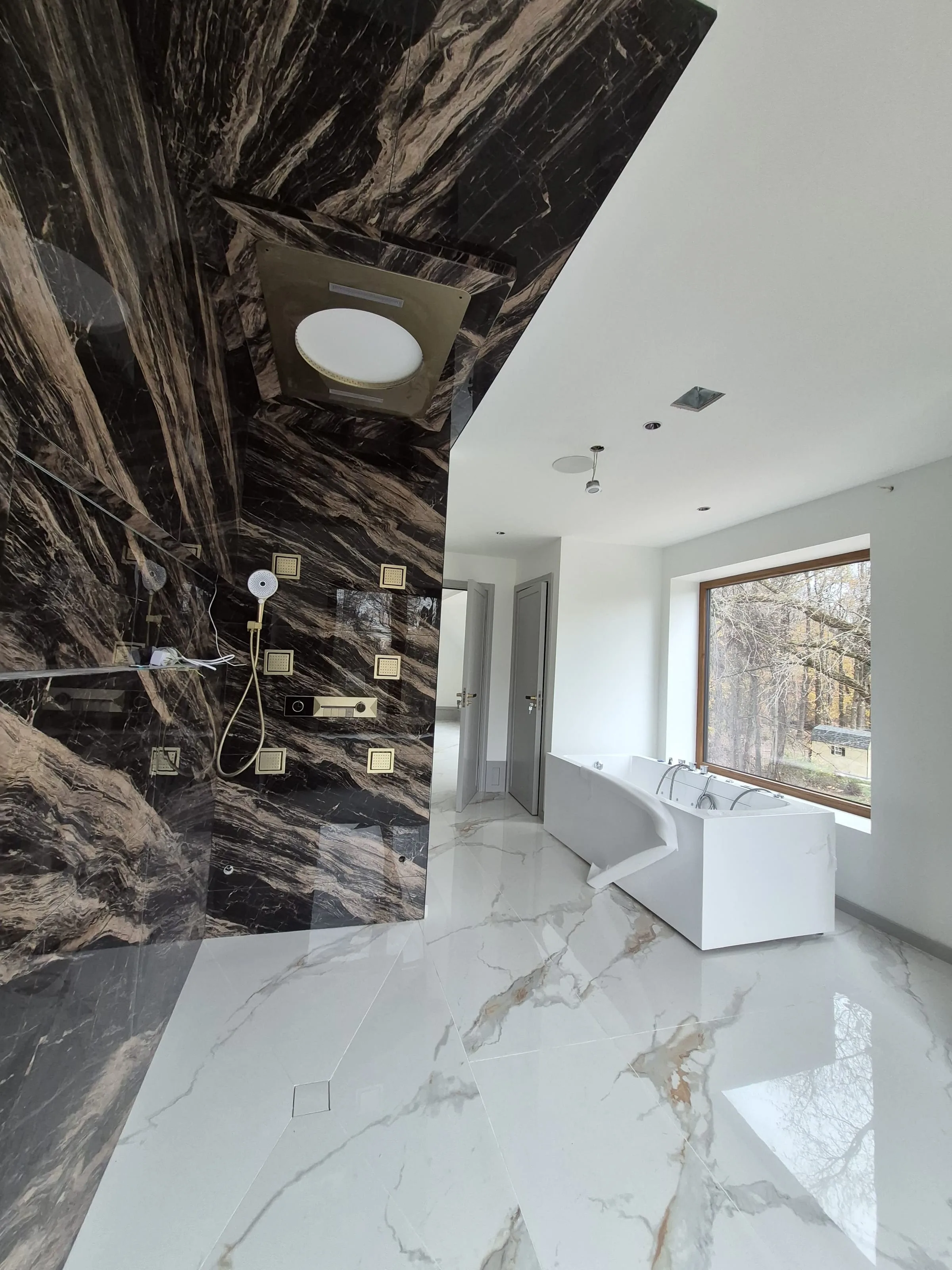
Tile.
Dry-laid mockup before adhesive. Mitred outside corners on natural stone. Hand-laid mosaic feature walls. Grout color confirmed against a wet sample before bagging.
-
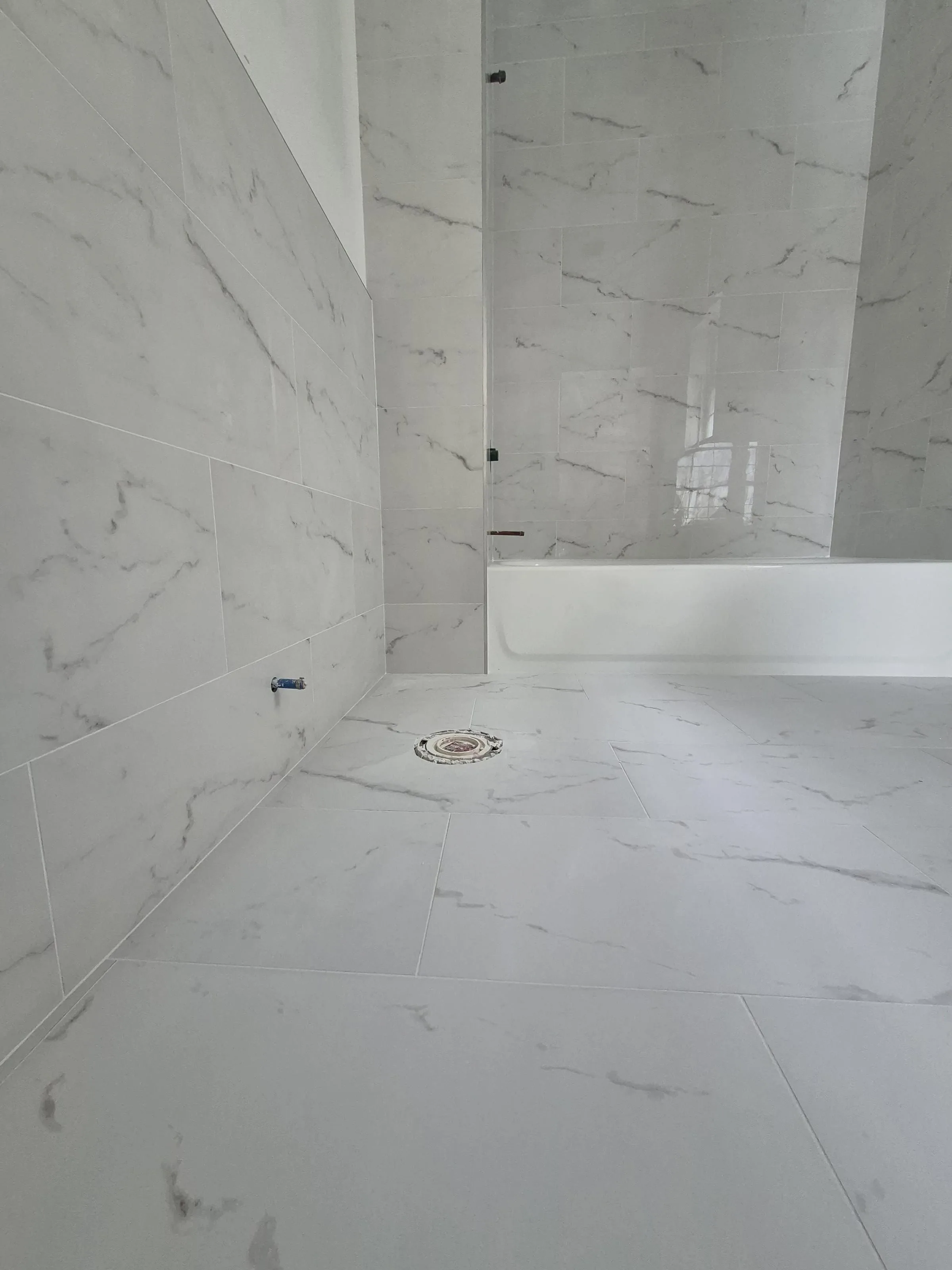
Stone.
Calacatta, Carrara, statuario slab. Bookmatched walls and waterfall vanities templated on site. Edge profiles mocked up in MDF before fabrication. Slab orientation marked before delivery so the driveway crew sets the right side first.
-
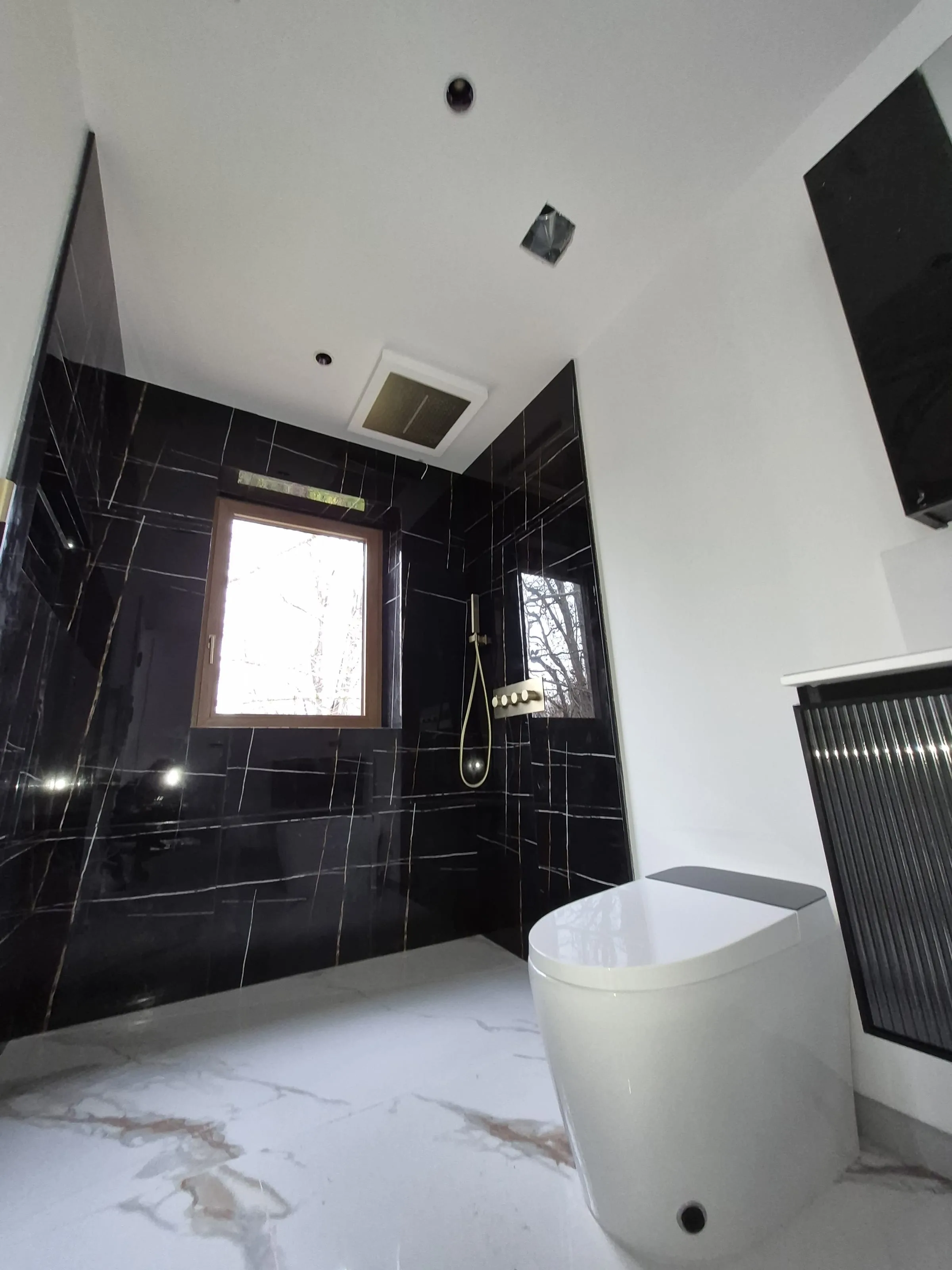
Fixtures.
Brass and bronze supply lines, pressure-tested before walls close. Premium valves, thermostatic shower controls, and smart-shower diverters — installed to manufacturer spec. Township-code-compliant plumbing throughout.
-
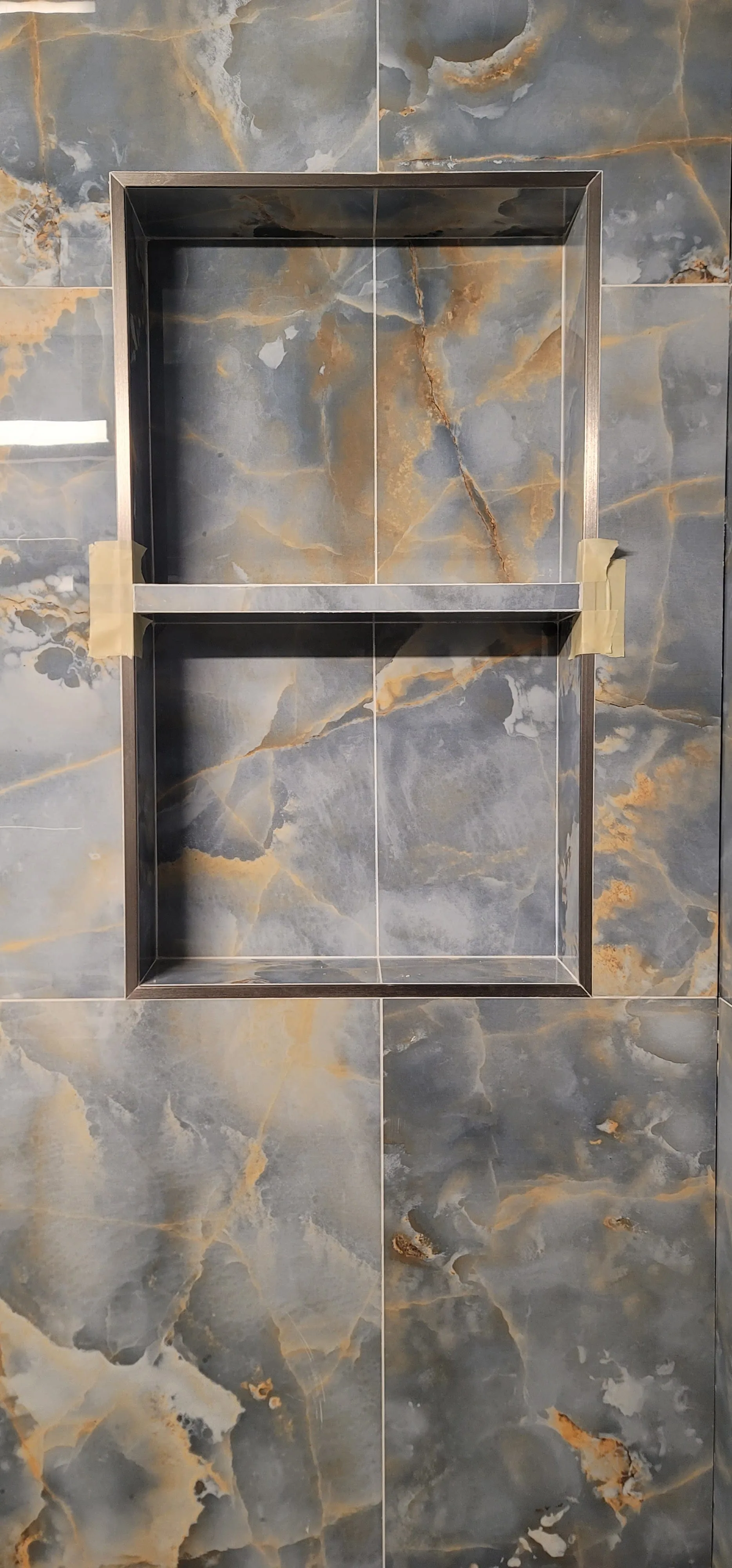
Glass & feature walls.
Frameless shower enclosures, low-iron clear glass, mitred outside corners — nothing thinner than 3/8". Lit niche details and bookmatched feature walls planned in framing, not bolted on after tile.
-
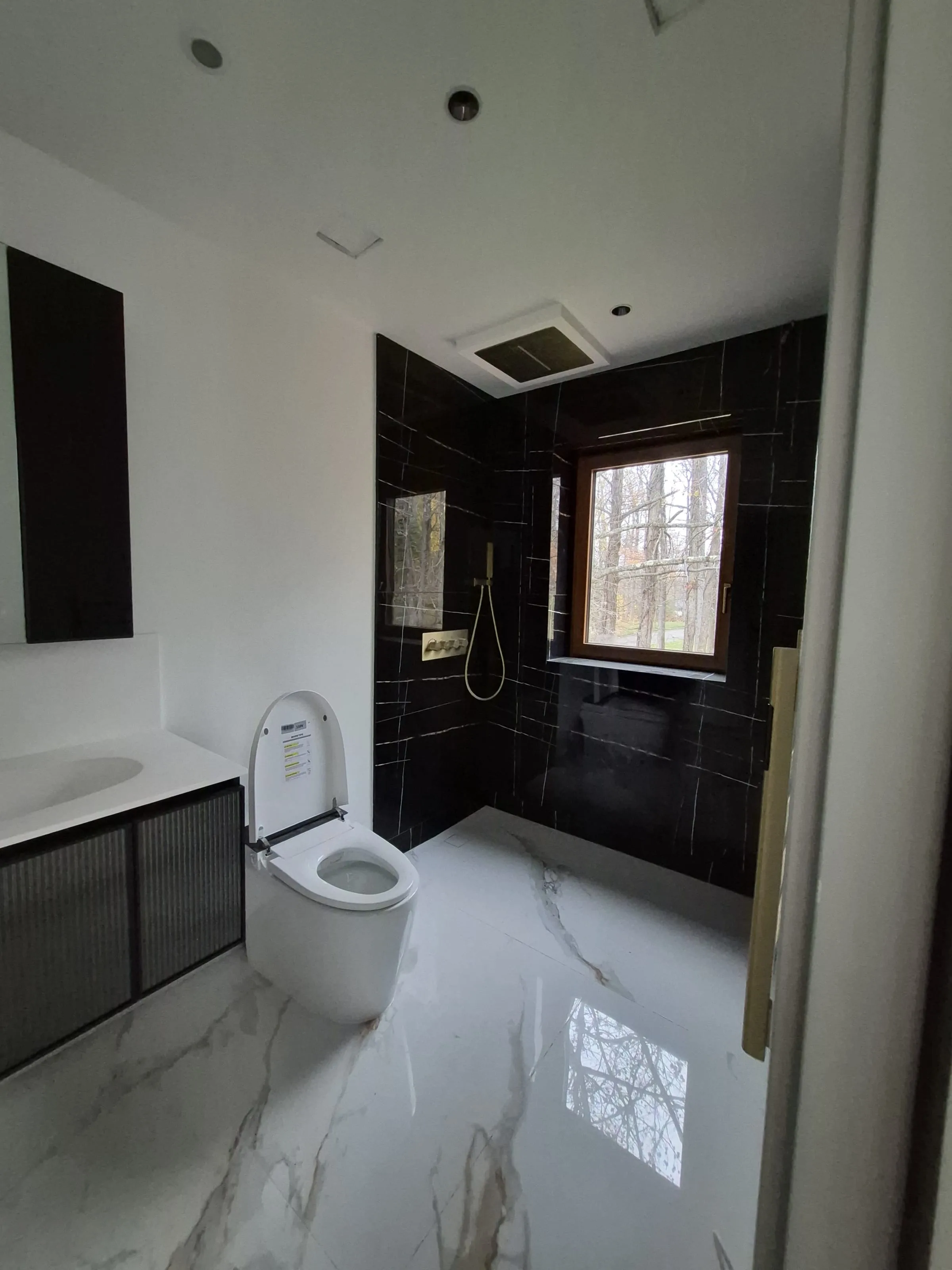
Smart-home & lighting.
Heated electric or hydronic floors, app-controlled shower valves, pre-wired smart mirrors, motion-sensor niche lighting, integrated audio. Roughed in during framing, never after tile.
Process
Four steps. No surprises.
Same four-step process as every project. Long Island adds the township-by-township permit cycle — Hempstead, North Hempstead, Oyster Bay, Babylon, Huntington, Smithtown, Islip, and Brookhaven each run their own building department. Permit timelines run 6 to 14 weeks depending on scope; variance hearings add 60 to 90 days when a setback exception is needed. We file the package, sequence the inspections, and run the build with the drive-time constraint built into the schedule.
-
Free consultation
On site or by video. We measure, photograph the existing space, and walk through scope. Same-day response on most inquiries.
-
Design and scope
Drawings, finish selections in three tiers, and a written line-item proposal. You see exactly what’s in and what’s out before you sign.
-
Build
Floor protection in place before tools arrive, dust barriers up before demo. In-house tile and stone setters, trusted licensed plumbers, daily clean-down.
-
Walk-through and warranty
Final punch, deep clean, and the 2-year written workmanship warranty. Pass-through manufacturer warranties on tile, fixtures, and cabinetry.
Featured Projects
Recent Long Island builds. Built to last.
A recent Long Island build representative of the central-Nassau workstream — single-family whole-house renovations with the original housing-stock detailing preserved alongside new mechanical systems and finishes. Additional case studies will be added as Long Island portfolio shoots come back from the photographer.
Service Areas
Where we build.
We’re based in Newark, NJ, and we work across the NYC metro from there. Five boroughs, Long Island, Yonkers, and northern New Jersey are all on the standard route.
And 30+ surrounding cities within a 50-mile radius of Newark, NJ
FAQs
Long Island-specific questions.
Township permits, drive-time honesty, second-story additions, basement code review, septic and well coordination, and FEMA flood-zone work — the things that actually decide how a Long Island remodel runs.
Where on Long Island do you work?
Most of our Long Island work is in Nassau County and the western half of Suffolk County. The further east you go on Long Island, the longer the drive from our Newark headquarters becomes — at the eastern edge of Suffolk we're pushing 90+ minutes one-way, which makes daily site management harder. We'll be honest on the consultation about whether your specific town is in our practical service zone or at the edge of our radius.
Do you handle the township permits each Long Island town requires?
Yes. Long Island is town-by-town for permitting — Hempstead, North Hempstead, Oyster Bay, Babylon, Huntington, Smithtown, Islip, and Brookhaven each run their own building department with their own forms, fees, and inspection workflows. We've filed in most of the western and central Long Island towns. Permit timelines run 6 to 14 weeks across most municipalities depending on scope.
Are home additions a Long Island specialty?
It's where most of our addition work happens. Long Island's single-family detached housing stock and lot sizes mean dormers, second-story additions, bump-outs, and integrated garage additions are standard scope — far more common here than in any of the NYC boroughs (except Staten Island). We file the township permit, coordinate with structural engineers and architects we've worked with for years, and manage the build through final inspection.
What's the typical Long Island housing stock you work with?
Mixed by era. Central Nassau has substantial post-war (Levittown-era) housing — 1940s–1950s ranches and capes with full basements and modest lot sizes. The North Shore has older homes ranging from late-1800s estates to 1920s colonials. The South Shore has a mix of mid-century and newer construction. Suffolk has more new construction (post-1970s) and larger lots. We work all of them; the project type adjusts to the era.
How long is the drive from Newark to Long Island?
Nassau is about 60 to 90 minutes via the Verrazzano Bridge or Manhattan crossings + the LIE. Western Suffolk pushes 75 to 100 minutes. Central and eastern Suffolk runs 90 to 120+ minutes. Drive time is the constraint that defines the eastern edge of our practical service zone — east of about Smithtown / Patchogue, daily site management becomes inefficient. We'll discuss it openly on the consultation.
Do you do basement finishing on Long Island?
Yes. Most Long Island single-family homes have full basements, and finishing them as family rooms, home theaters, in-law suites, or walk-out basements (where grade allows) is regular scope. We do waterproofing first when the foundation needs it. Code requires a minimum 7-foot finished ceiling height and egress windows for habitable bedroom use.
Can you do whole-house renovations on Long Island?
Yes. Single-family whole-house renovations on Long Island are well-suited to our process — owner-direct decisions, township permits we file, driveway-based logistics, full basements available for material staging. Whole-house gut renovations typically run 5 to 9 months on the build plus 6 to 12 weeks of design and permitting. Often paired with a home addition (second-story, dormer, or bump-out) when the homeowner wants the full reset.
What about waterfront and flood-zone considerations on Long Island?
Significant portions of the South Shore and waterfront Long Island are within FEMA flood zones. Renovations in flood zones may have specific code requirements: elevation of mechanical equipment, flood-resistant materials below the design flood elevation, and waterproofing standards. We confirm flood-zone status during the consultation and design accordingly. We do not handle flood claims work — that's a public adjuster's role.
Project intake